
What is a passive house?
Not a brand. Not a style. Not solar panels. A passive house is a measured building-performance standard, the most rigorous in residential construction. Here is what it actually means, in plain English, for an Australian home.
01 · The definition
A standard you can measure, not a label you can claim.
A passive house (Passivhaus) is a home built so well that the building itself does the work of keeping you comfortable. The envelope, insulation, airtightness, windows, and ventilation, is engineered to hold a stable temperature year-round on a fraction of the energy a normal home needs.
The standard is set by the Passive House Institute (PHI) in Germany and verified two ways: the design is modelled in PHPP energy software, and the finished home is blower-door tested for airtightness. That is the difference between a certified passive house and a home merely built to “passive principles”.
Measured. Modelled in PHPP and blower-door tested on the finished home.
A claim. Built loosely to the idea, with nothing tested or proven.
02 · Why it matters
What this actually means for your family.
We spend about 69% of our lives inside our own home, and indoor air can be up to five times more polluted than the air outside (US EPA). We insist on filtered, ventilated air in offices and hospitals, yet rarely in the one building we occupy most. A passive house is the rare home built to fix exactly that.
Set the building physics aside for a moment. If this is the home your family will live in for the next thirty years, here is what the standard quietly changes about everyday life in it.
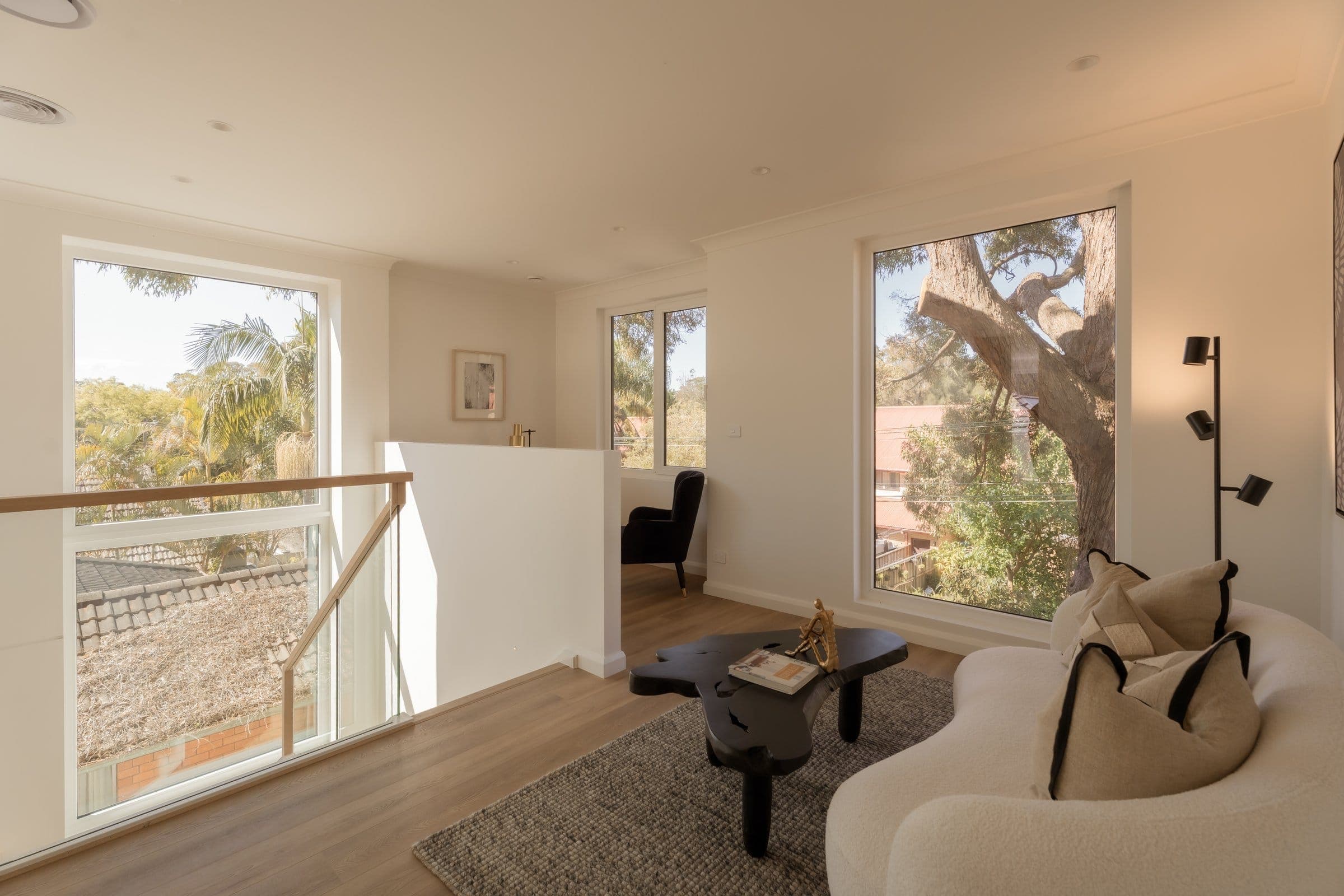
Marvel passive house, Lilyfield
Every room, comfortable all year
No more rooms that bake in summer or freeze in winter, and no chasing the thermostat. A passive house holds a steady, even temperature right through the home, so every room is genuinely usable every day. As the Australian Passivhaus Association puts it, we have quietly normalised 35°C indoors in summer and 13°C in winter, and that is not comfort, it is compromise.
Does Passivhaus work in Australia?↗Air that is healthier to breathe
Fresh air is filtered before it reaches your family, so pollen, dust and traffic pollution are largely left at the door. Because the building stays warm and dry with no cold, damp surfaces, the mould that triggers asthma and allergies has nowhere to grow. For a household with young kids, or anyone who reacts to dust and pollen, this is the benefit they feel first.
Passipedia: ventilation and air quality↗A noticeably quieter home
The same airtight, heavily insulated shell that holds your temperature also keeps sound out. Traffic, neighbours, mowers and barking dogs fade into the background. Most owners notice the quiet on the very first night.
Running costs you can count on
Around 80% less energy for heating and cooling means smaller, steadier bills and real protection as power prices climb. The extra you invest in the building fabric buys lower running costs for the entire life of the home, not a one-off saving.
Passipedia: affordability↗Ready for what the climate brings
Bushfire smoke is not just unpleasant; the 2019–20 Black Summer smoke was linked to an estimated 417 excess deaths and thousands of hospital admissions across eastern Australia. On a smoke day, a 40-degree day, or during a blackout, a passive house holds a safe, stable temperature far longer than a standard home, and you can stay shut to the smoke while still breathing filtered air. Building to this standard now also puts your home well ahead of tightening energy rules.
Medical Journal of Australia: 2019–20 bushfire smoke health burden↗The part no one mentions
Stale air does more than smell. It makes you tired.
Mould gets the headlines, but the bigger day-to-day problem in a sealed-up home is the carbon dioxide you breathe out. Fresh outdoor air sits around 400 ppm. Above roughly 1,000 ppm, the long-standing health benchmark, a room starts to feel stuffy and people report headaches, fatigue and trouble concentrating. In a closed bedroom with two people, CO2 can pass that limit within the first hour and climb toward 7,500 ppm by morning. That heavy-headed, groggy start is something a lot of families have simply learned to live with.
A passive house never depends on someone remembering to crack a window. Heat-recovery ventilation runs quietly around the clock, holding fresh, filtered air near that healthy level all night, which is exactly the range good sleep depends on.
CO2 in the air you breathe (ppm)
~400 ppm
Fresh & alertFresh outdoor air, just outside your window.
~1,000 ppm
Stuffy sets inThe healthy limit. A passive house holds around here all night, on its own.
~7,500 ppm
Groggy, poor sleepA closed bedroom, two people, by morning. Close to eight times the healthy limit.
Continuously fresh, filtered air in every room. The calm of the outdoors, without the dust, pollen or smoke.
The home is the system.
A passive house is not one clever gadget. It is five building fundamentals working together, which is why the comfort and the low bills are reliable rather than hopeful. Tap any part of the home to see how it is built and what it does for your family.
Click any element to open it in full detail
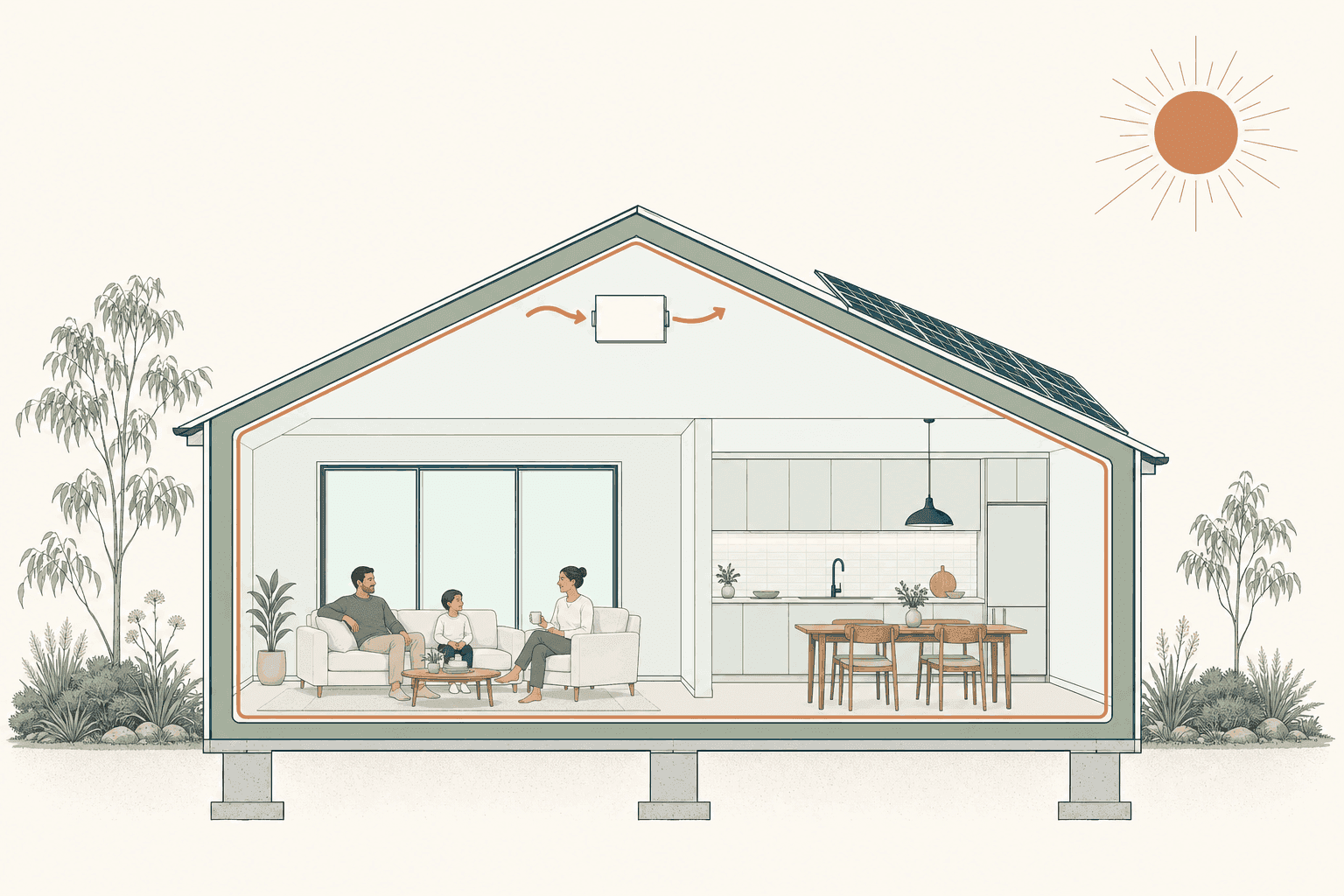
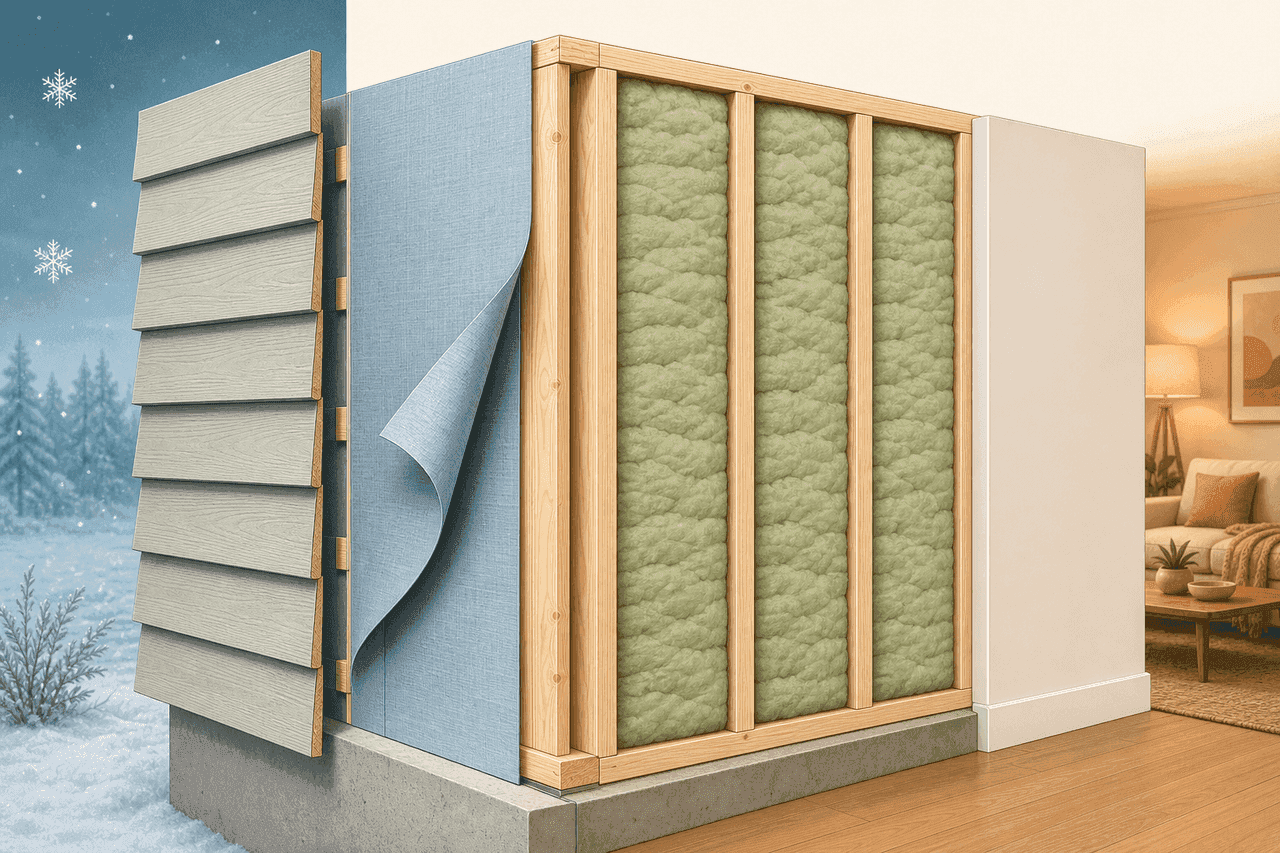
Continuous insulation
Click to explore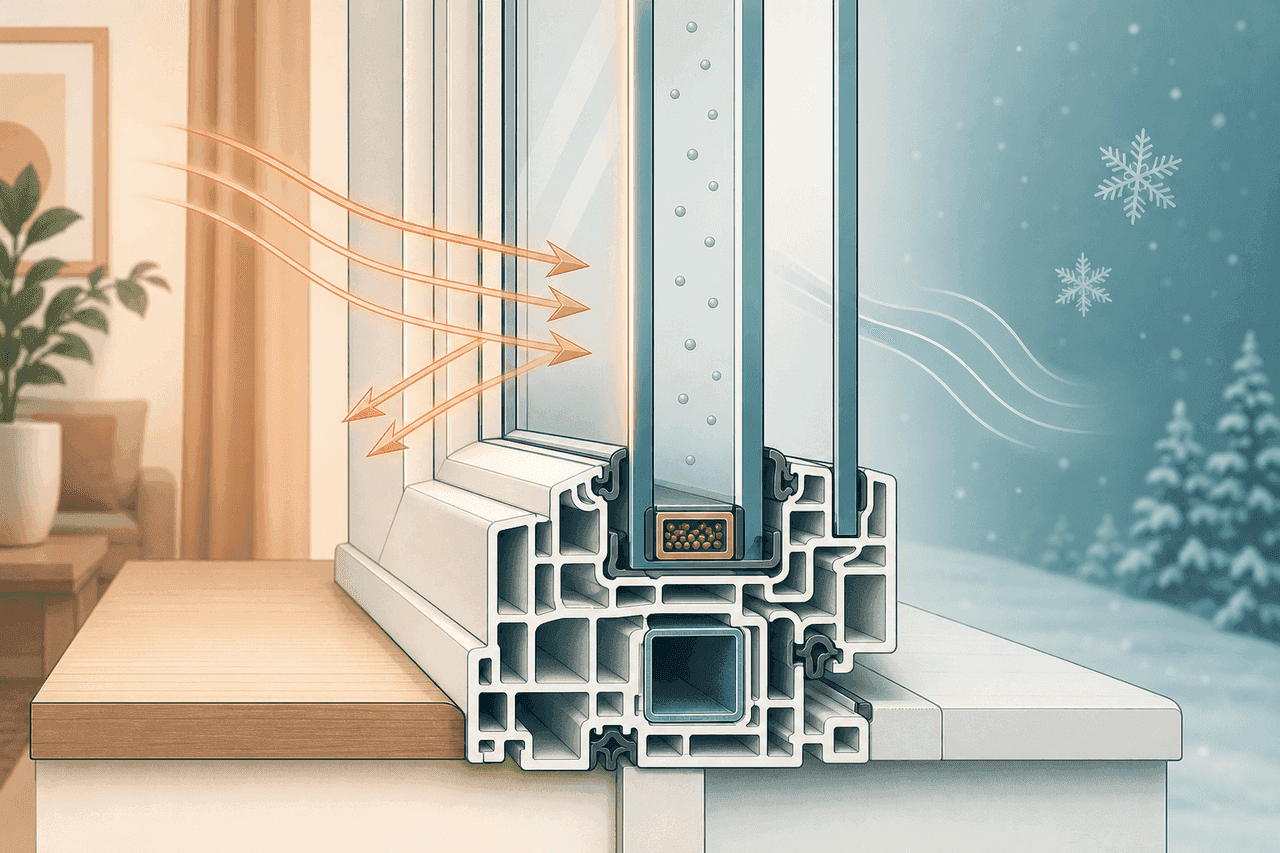
Double-glazed windows
Click to explore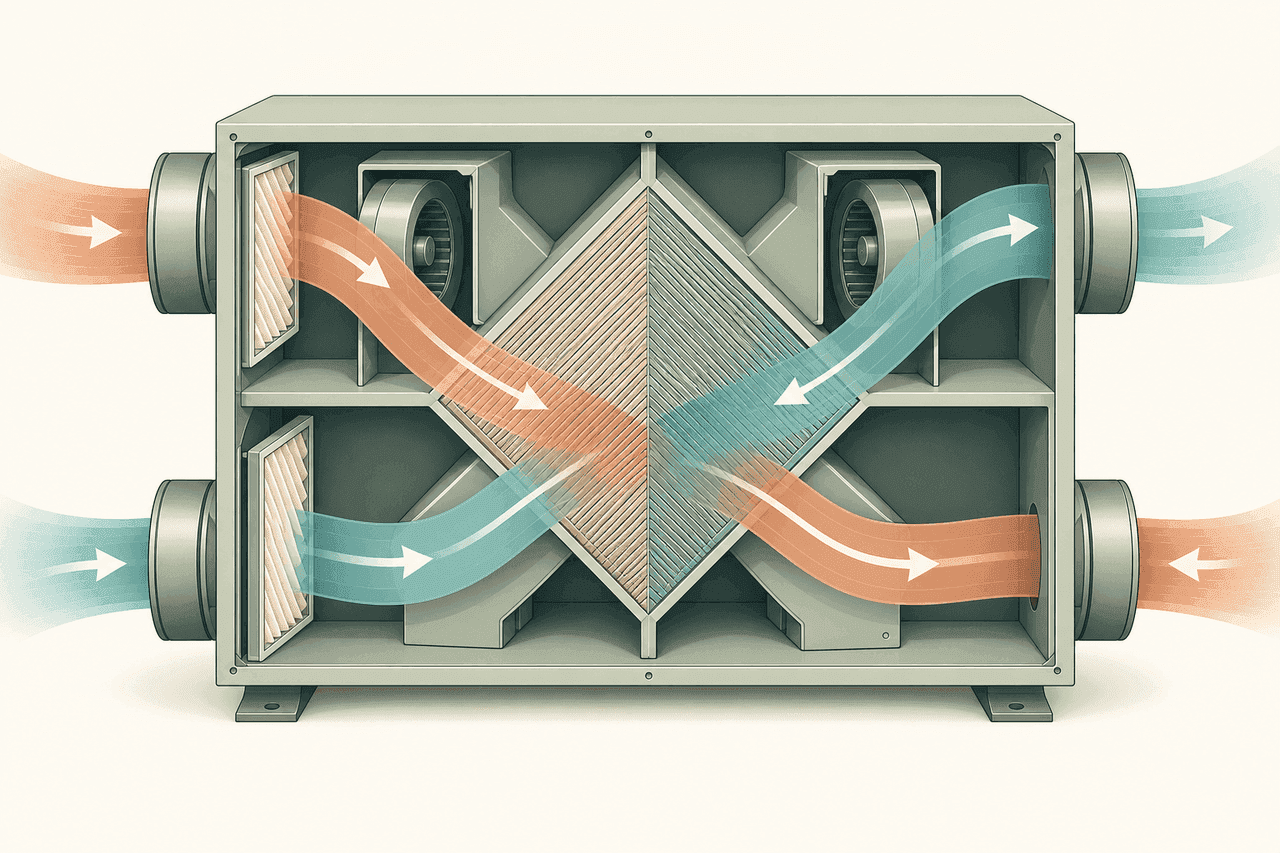
Heat recovery ventilation
Click to explore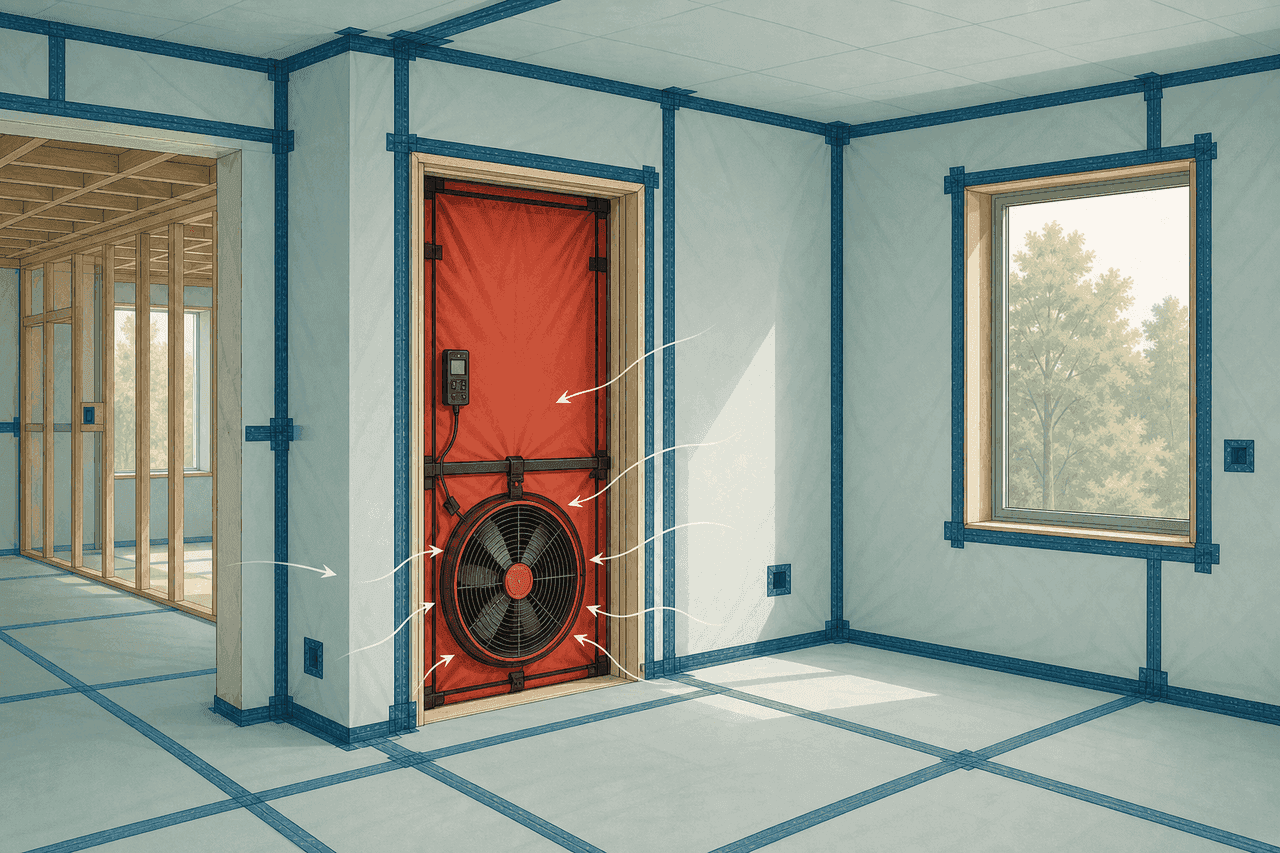
An airtight envelope
Click to explore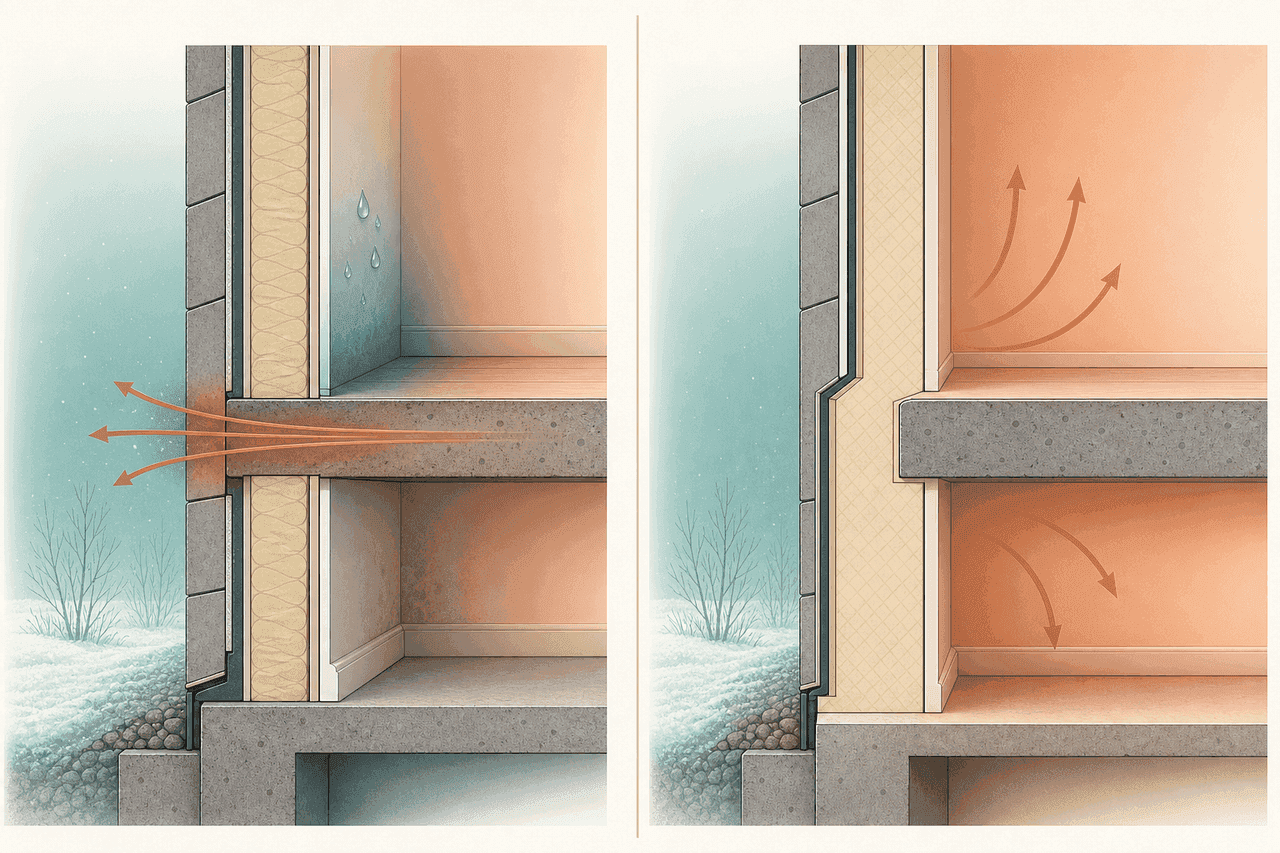
No thermal bridges
Click to exploreContinuous insulation
Tap to exploreDouble-glazed windows
Tap to exploreHeat recovery ventilation
Tap to exploreAn airtight envelope
Tap to exploreNo thermal bridges
Tap to exploreDiagram: Marvel Homes. Further reading: Passipedia: What is a Passive House?, Passipedia: thermal protection (the envelope), Passipedia: building services (ventilation).
20–25°C
Stable year-round, without constant heating or cooling.
−80%
Versus a standard Sydney home.
Continuous
Fresh filtered air, exchanged all day.
0.6 ACH
The PHI target, blower-door tested. A typical new Australian home leaks at 15.4.
05 · The comparison
Passive house versus a standard Australian home.
Both have heating and cooling. The difference is how hard those systems have to work, and how the home feels when they are off.
- Temperature swings room to room and season to season.
- Air conditioning runs hard to compensate for a leaky shell.
- Draughts, cold floors, and condensation that can lead to mould.
- Recirculated, often stale indoor air.
- High and rising energy bills.
- Stable 20–25°C throughout the home, all year.
- Small mechanical systems that rarely need to run.
- No draughts, no cold spots, no moisture traps.
- Continuous fresh, filtered air via HRV.
- Around 80% less energy than a standard home.
06 · Myths, busted
What people get wrong about passive houses.
The standard is widely misunderstood, often by people who have never set foot in one. Here are the four we hear most, and what is actually true.
“It’s sealed shut. You can’t open the windows.”
The reality
You can open every window whenever you like. Airtightness is about stopping uncontrolled leaks through gaps and cracks, not about locking you in. The ventilation simply means you get fresh, filtered air all day without having to open a window, which matters most when it is too hot, too cold, too noisy or too smoky outside to want to.
Australian Passivhaus Association: airtightness explained↗“It’s just solar panels and a battery.”
The reality
Solar generates energy. A passive house slashes how much energy the home needs in the first place. They solve different problems. Bolting solar onto a leaky, poorly insulated home still leaves you with draughts, cold spots and stale air. A passive house fixes the building itself, and solar then becomes the cream on top.
The five principles, explained↗“It’s a cold-climate European idea. It won’t work in Sydney heat.”
The reality
It is a performance standard, not a design style, and it is modelled in PHPP software for your exact location. A Sydney home is designed for Sydney’s heat and humidity, not a European winter. In fact, airtightness matters more in a warm climate, not less, because it stops hot outside air leaking in and undermining the cooling.
Read: Does Passivhaus work in Australia?↗“It’s only worth it for the energy bills.”
The reality
Lower bills are real, but most owners talk about how the home feels first. A stable temperature in every room, no draughts, quiet, and continuously fresh filtered air that helps with asthma, allergies and mould. The comfort and health are the headline. The savings come with them.
Passipedia: ventilation and indoor air quality↗Wondering if it fits your block?
The honest answer depends on your site, your brief and your budget. A short conversation will tell you whether a certified passive house is the right call for your family, with no pressure either way.
Common
questions
Passive house, answered.
Tap a question to open it.
What is a passive house in simple terms?
+
A passive house is a building-performance standard, not a style of architecture. It is a home built so well, insulated, airtight, and ventilated, that it holds a stable comfortable temperature year-round using around 80% less energy than a standard home. The Passive House Institute (PHI) in Germany sets the standard, and a home is independently modelled and tested to confirm it meets it.
Is a passive house the same as a 7-star NatHERS home?
+
No. A 7-star NatHERS rating is Australia's minimum compliance target and sits well below Passive House (PHI) certification, which a certified passive house always exceeds (typically rating around 8 to 9 stars on the NatHERS scale). A 7-star home still relies heavily on heating and cooling to stay comfortable. A certified passive house achieves comfort with only a fraction of that energy, because the building envelope does the work.
What are the five principles of a passive house?
+
Continuous insulation, an airtight building envelope, thermal-bridge-free construction, high-performance (typically double or triple glazed) windows, and mechanical ventilation with heat recovery (HRV/MVHR) that supplies continuous fresh filtered air. Together these five deliver stable temperature, healthy air, and very low energy use.
Does a passive house work in the Australian climate?
+
Yes. The passive house standard is climate-adaptive: the same principles are modelled to each location, so a home in Sydney is designed for Sydney's heat and humidity, not a European winter. Marvel Homes builds certified passive houses across Sydney, modelled in PHPP for the local climate and tested with a blower door at handover.
Does a passive house cost more to build?
+
A passive house typically costs 15 to 20% more than a standard build at construction, but runs on far less energy and stays comfortable without constant heating and cooling. Marvel Homes works with budgets from $900K to $2M+ and prices each home through PHPP energy modelling rather than ballpark figures.
Backed by
the standard
Nothing on this page is just our opinion. The science comes from the bodies that define and certify the Passive House standard worldwide, and Marvel builds to it, with every qualifying home independently certified by a third-party PHI-accredited certifier.



Further reading
Thinking about building one?
Marvel Homes is a certified passive house builder in Sydney, led by two engineers who are on every project. Start with a conversation about your block and brief.
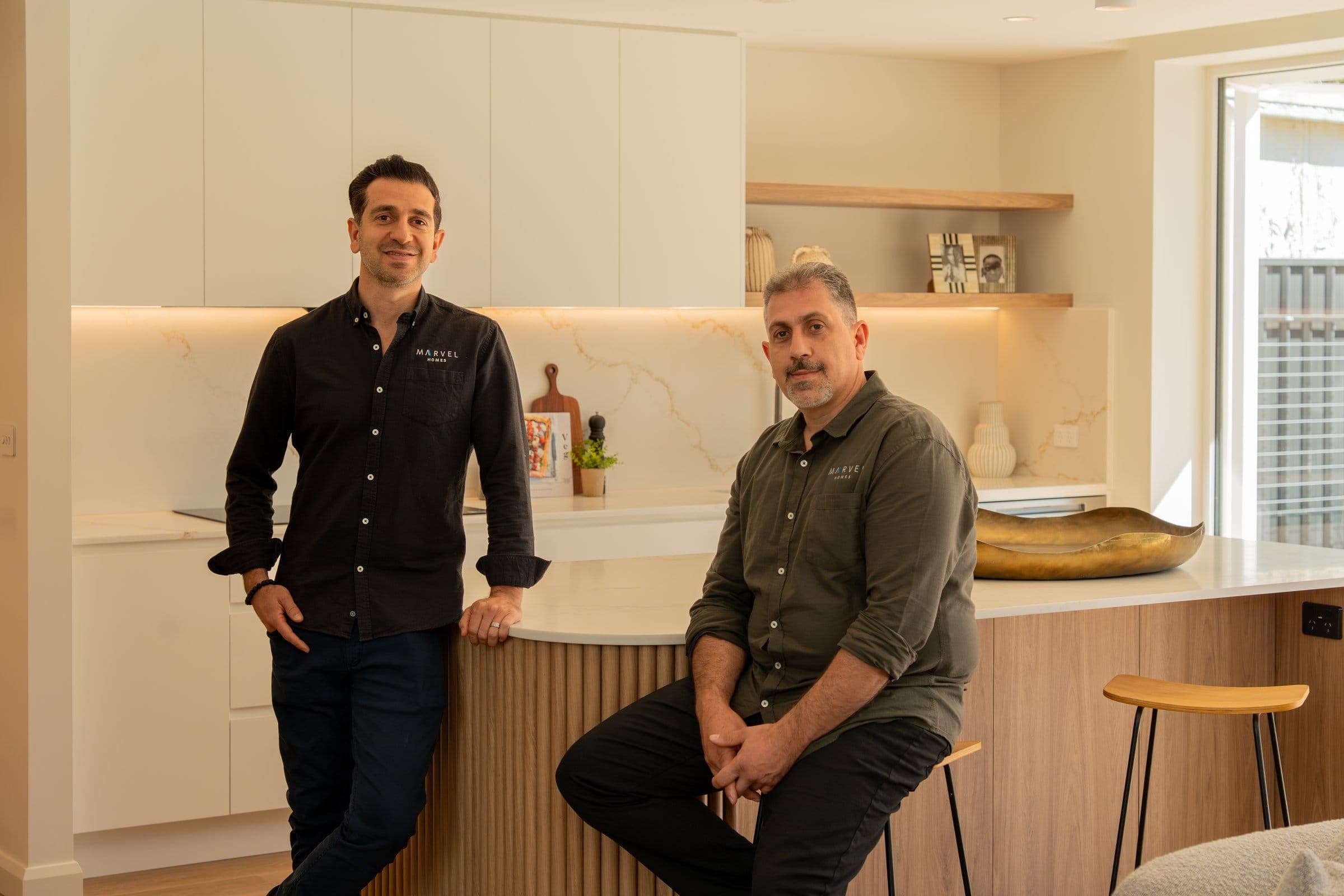
Mo Amin + Ibrahim Amin
Engineers · Licensed Builders · Certified Passive House Tradesperson