
Energy efficient homes, Sydney.
Almost every new home is sold as “energy efficient.” Most only meet the legal minimum. If you want the best home you can build, one that is genuinely cheap to run and comfortable every day, it is worth knowing what actually delivers that, and how far it can go.
Start here
“Energy efficient” is a floor, not a finish line.
The phrase has been stretched to mean almost nothing. A home with a heat pump and a few solar panels gets called energy efficient even if the shell leaks heat all winter and overheats every summer.
Real efficiency is decided by the building envelope, the insulation, airtightness, windows, and orientation that determine how much energy the home needs before you switch anything on. Get that right and everything else gets smaller, cheaper, and easier.
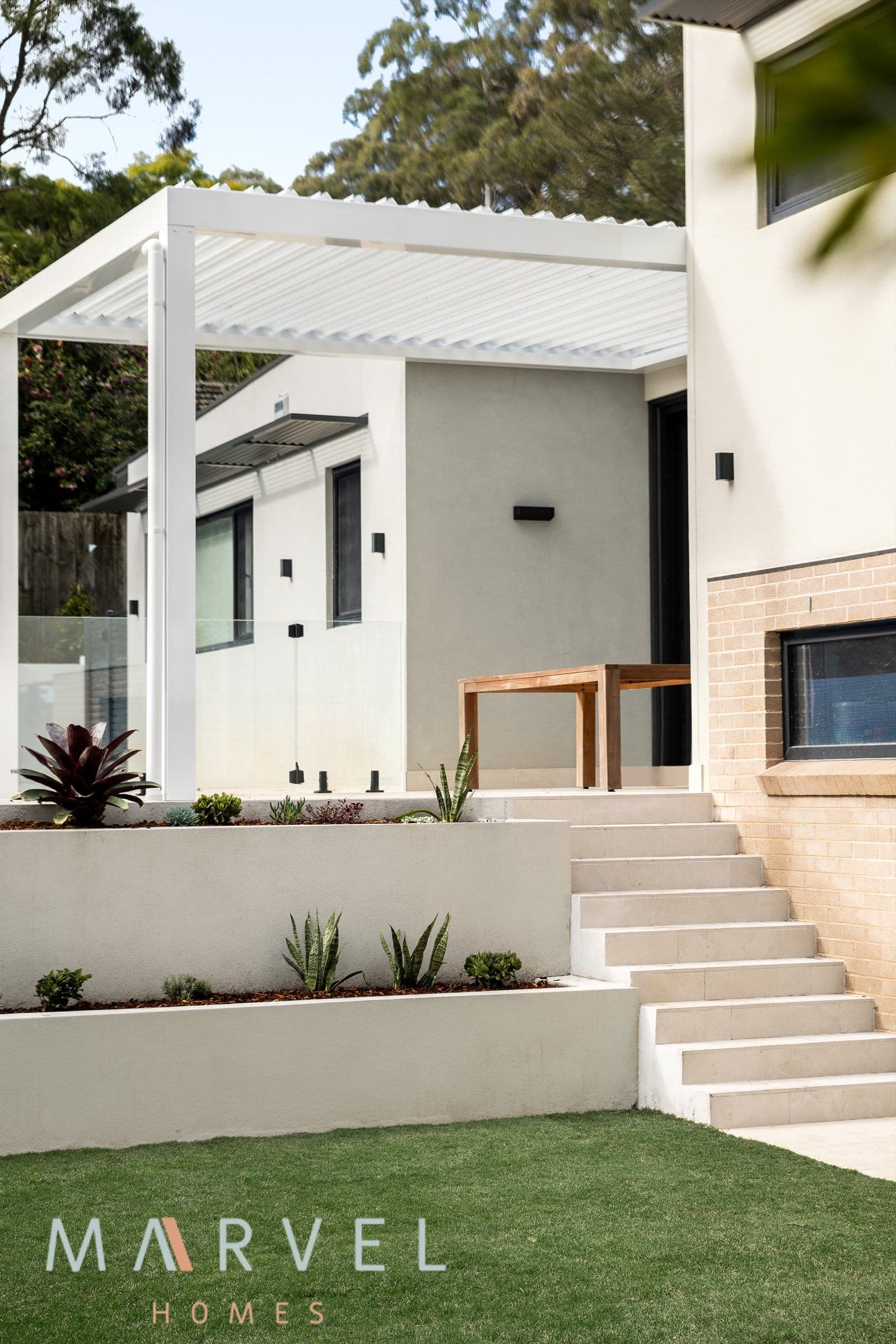
Quietly efficient, all year round. The comfort shows up the day you move in.
The efficiency ladder
Three rungs. Most homes stop at the first.
Energy efficiency is a spectrum, not a yes/no. Knowing where a build sits on it tells you what you are actually buying.
7-star NatHERS (minimum)
The legal minimum for a new home in NSW. Better than older homes, but still leans hard on heating and cooling to stay comfortable.
High-performance build
Deliberately exceeds minimum: more insulation, better glazing, tighter construction. Real gains, but without independent verification of the outcome.
Certified passive house
Independently modelled and blower-door tested to the PHI standard. Around 80% less energy, stable temperature, continuous fresh air. The most efficient home you can build.
What actually moves the needle
The six levers, in order.
Note the order. Reduce the energy the home demands first, then generate the little that is left. Doing it backwards is the most common, and most expensive, mistake.
Insulation
A continuous, unbroken insulation layer around the whole home, not just batts that stop at every gap and junction.
Airtightness
A sealed envelope, blower-door tested. Uncontrolled air leakage is one of the biggest hidden energy losses in a Sydney home.
Glazing
Double or triple glazed, well-sealed windows that hold temperature and capture useful winter sun instead of leaking heat.
Orientation
Designing living spaces to the right aspect so the sun works for you in winter and is shaded out in summer. Free performance, by design.
Ventilation
Heat recovery ventilation (HRV) supplies fresh filtered air while keeping the energy already in the home. Health and efficiency together.
Then solar
Once demand is low, a modest solar system can cover most of what remains. Reduce first, generate second.
Around 80% less energy than a standard Sydney home, holding steady year after year.
Our approach
We engineer efficiency in. We do not bolt it on at the end.
Marvel Homes is led by two engineers, Mo Amin (Civil Engineer, Licensed Builder NSW #330031C) and Ibrahim Amin (Mechanical Engineer, Licensed Builder, Certified Passive House Tradesperson). Performance is modelled in PHPP before a wall is built and verified with a blower door at handover. The result is predicted, not hoped for.
Meet the engineers behind every build→Energy efficiency, explained in plain English.
A plain-English introduction to what a healthy, energy-efficient home gives a Sydney family: filtered fresh air, a steady temperature in every room and far lower running costs, proven rather than promised.
More real builds and client stories→Common
questions
Energy efficient homes, answered.
What makes a home energy efficient?
+
Genuine energy efficiency comes from the building envelope: continuous insulation, an airtight shell, high-performance windows, the right orientation, and heat recovery ventilation. Appliances and solar help, but they only manage the energy a home demands. A well-built envelope reduces the demand in the first place, which is where the real savings live.
Is a 7-star NatHERS home energy efficient enough?
+
A 7-star NatHERS rating is the current minimum standard for a new home in NSW, not a high bar. It still relies heavily on heating and cooling to stay comfortable. If you want a genuinely low-energy home, the next steps up are a high-performance build and, at the top, a certified passive house, which uses around 80% less energy than a standard home.
How much can an energy efficient home save in Sydney?
+
Savings depend on the build quality, not the label. A certified passive house can use around 80% less heating and cooling energy than a standard Sydney home, and the comfort gain (stable temperature, fresh air, no condensation or mould problems) is often valued as highly as the bill reduction. Marvel Homes models each home in PHPP so the performance is predicted, not promised.
Are solar panels enough to make a home energy efficient?
+
No. Solar offsets the energy a home uses, but a poorly built home still wastes energy and stays uncomfortable when the sun is down. The most cost-effective order is to reduce demand first through the envelope, then add solar to cover what little remains. Building it the other way around is paying to power inefficiency.
What is the most energy efficient way to build a home in Sydney?
+
Build to the certified Passive House (PHI) standard. It is the most rigorous energy and comfort standard in residential construction, climate-modelled for Sydney and verified with a blower-door test. Marvel Homes is a certified passive house builder, led by two engineers, building five to eight homes a year.
Build the best home you can.
If your goal is a genuinely efficient, comfortable, healthy home, that is exactly what a passive house builder delivers. Start with a conversation about your block and brief.
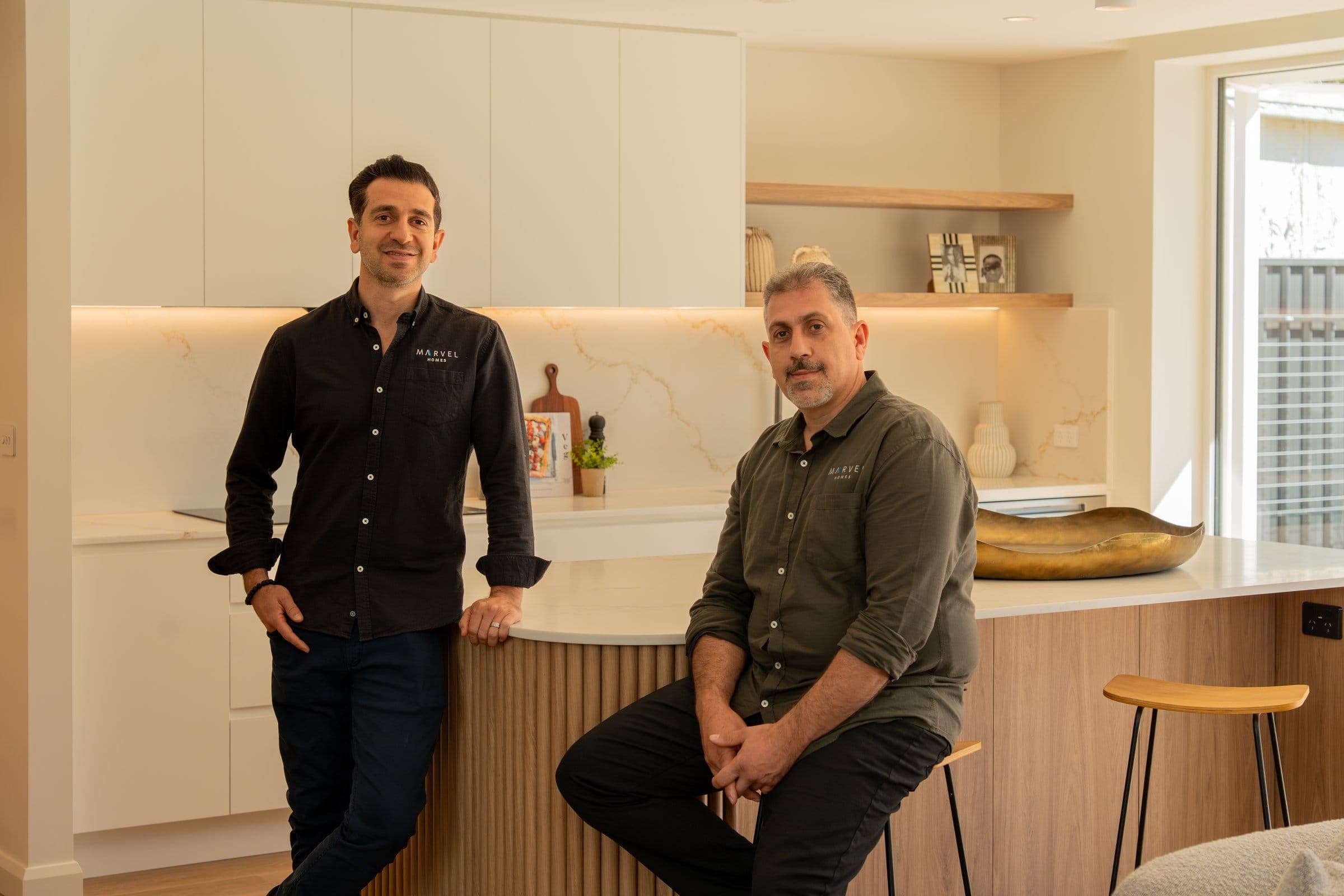
Mo Amin + Ibrahim Amin
Engineers · Licensed Builders · Certified Passive House Tradesperson