
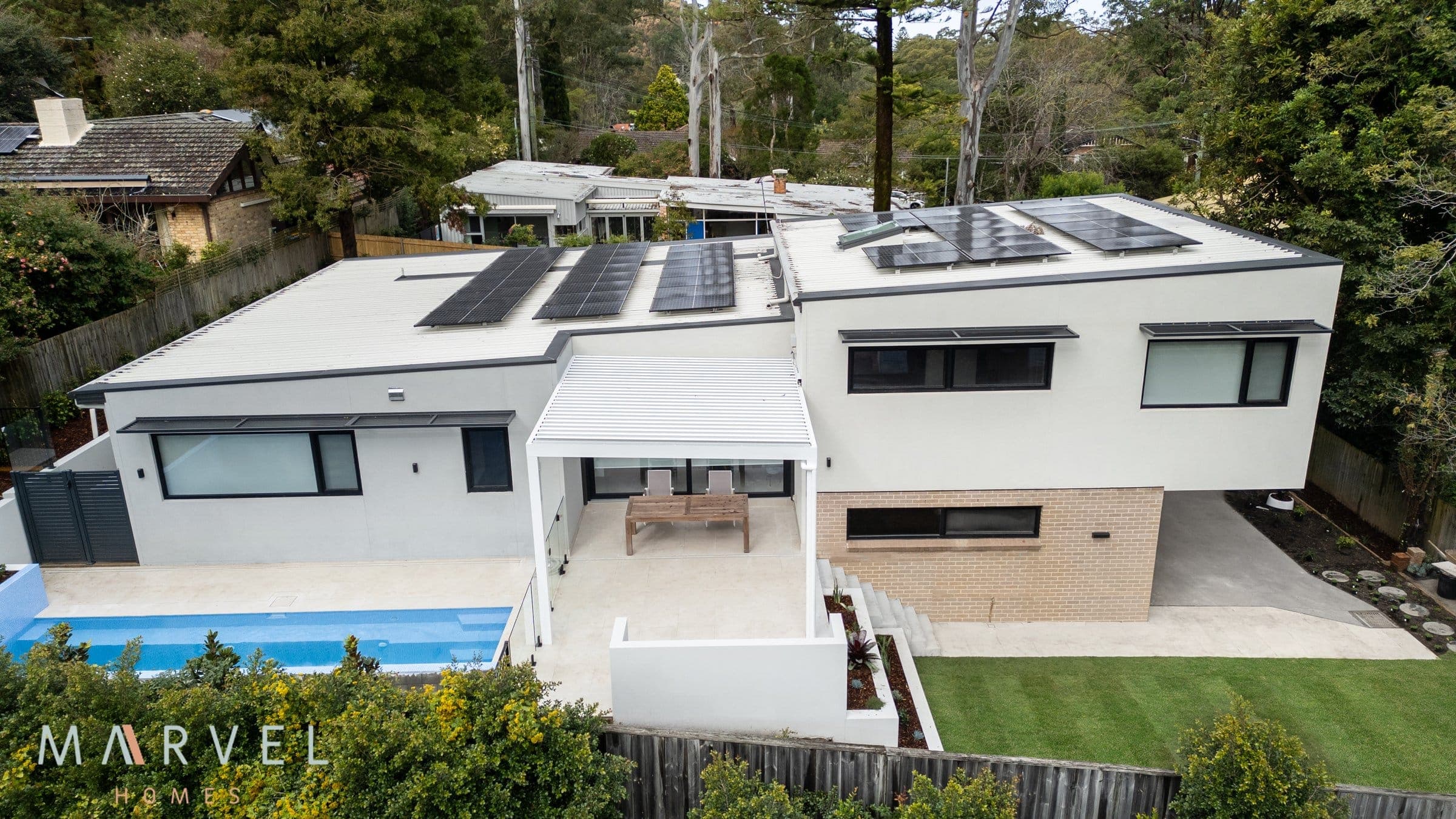
Knock-Down Rebuild
Builder Sydney
Heritage checks before you commit. CDC vs DA assessed at the start. Demolition, asbestos, and passive house construction managed by one team.
The land is the asset. What is sitting on it is often the problem. We knock it down and rebuild it as one team: heritage and approvals checked first, demolition managed, and a certified passive house on a fresh slab.
Warrawee, Upper North Shore
A tired home on a sloping block, replaced with a certified passive house. Rooftop solar, pool, and a steady 20 to 25°C year round.
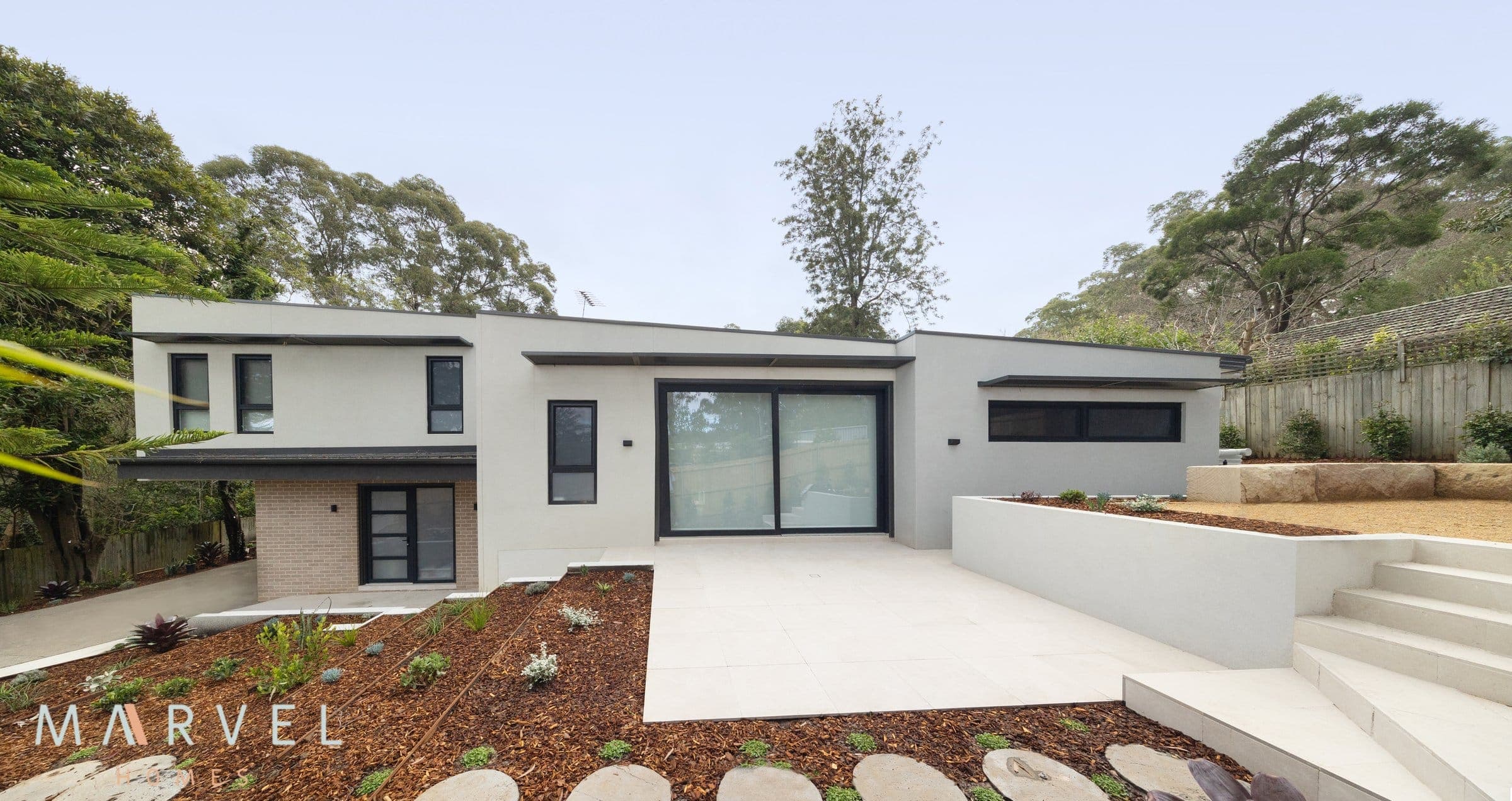
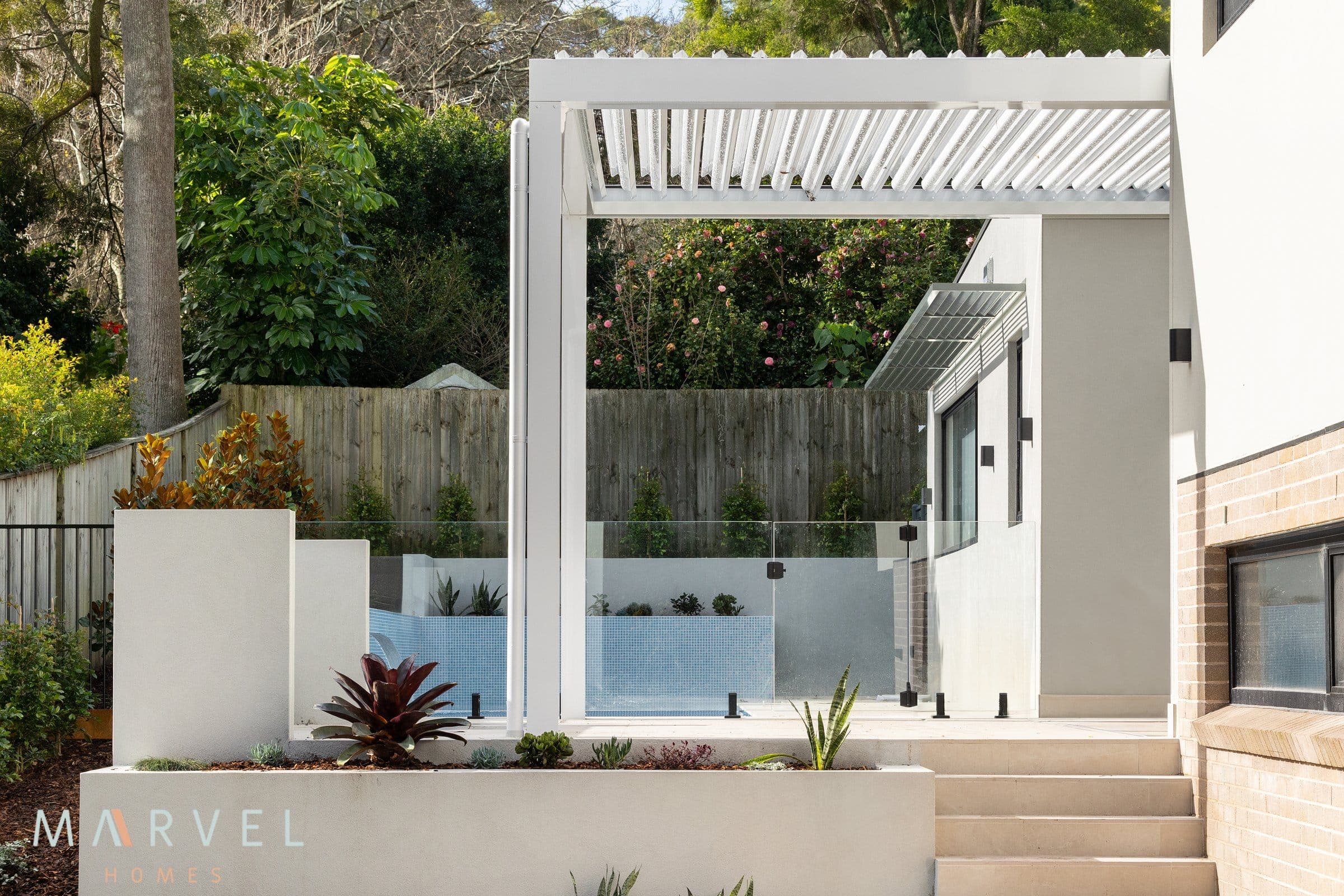
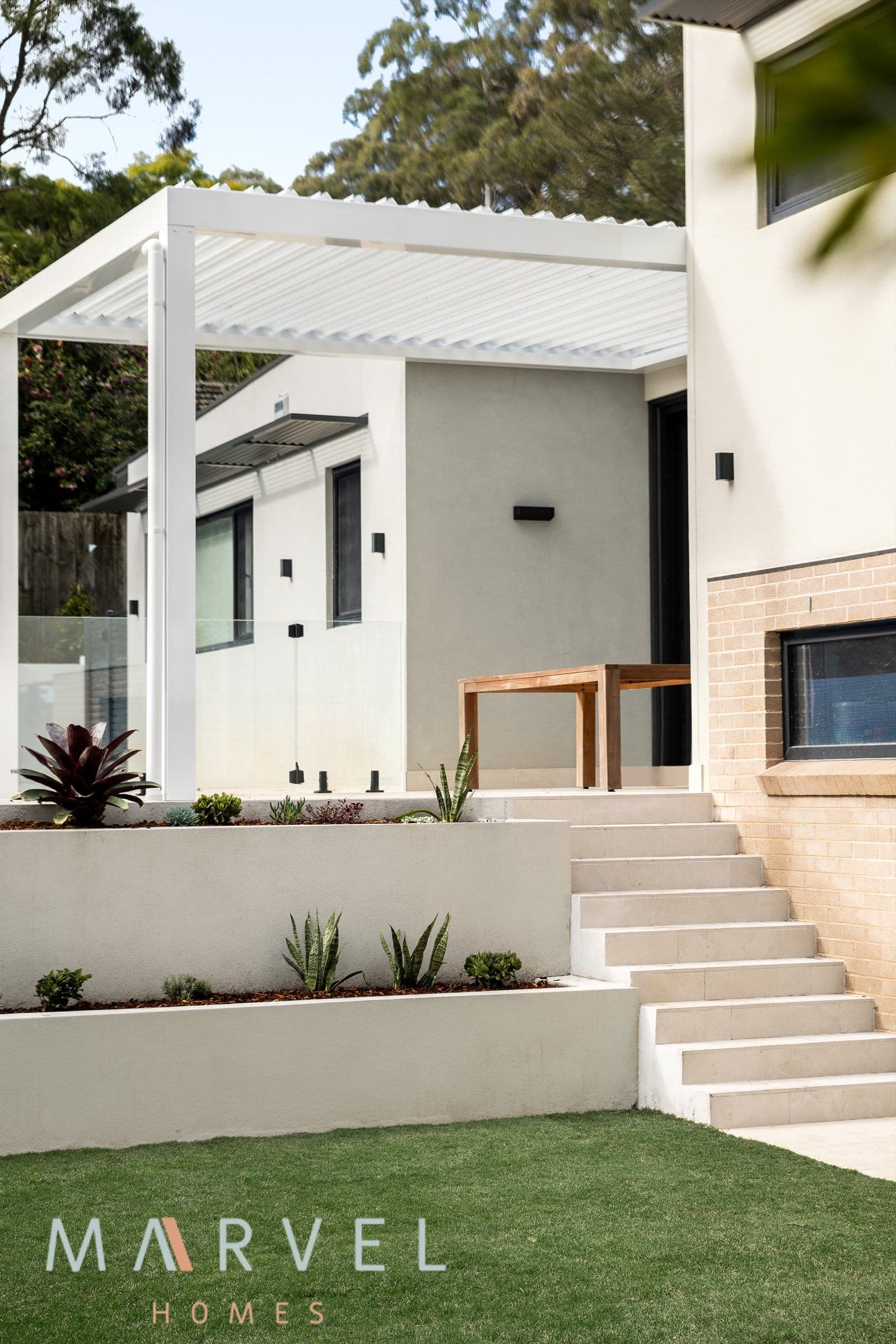
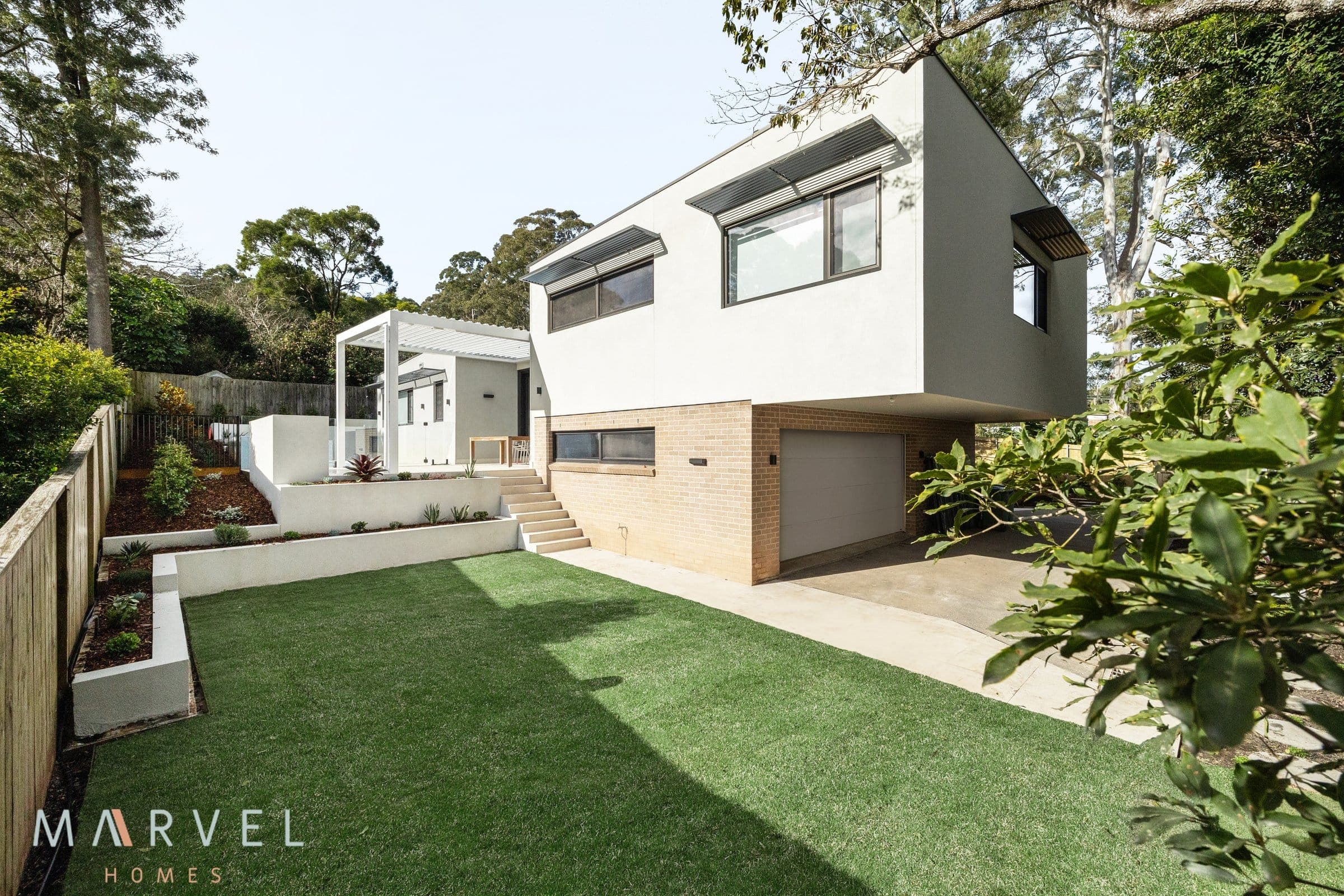
A passive house is a building standard, not a style. A sealed, well-insulated, mechanically ventilated home that holds a steady 20 to 25°C year round, uses around 80% less heating and cooling energy than a standard home, and filters the air it breathes. Certification is measured, not claimed: energy modelling plus an on-site blower-door test.
Read the plain-English guideWhen KDR makes more sense than renovating
Renovating an existing home preserves some value and avoids alternative accommodation costs. But many Sydney homes, particularly fibro and brick veneer homes built between 1950 and 1985, are not worth renovating. The structure is tired, the layout is wrong for how you want to live, and the cost of making an old home perform well thermally is often greater than the cost of starting fresh. We map out where that rebuild-versus-renovate line sits for a typical Sydney block.
A knock-down rebuild makes sense when the existing home has little or no heritage value, the block is well located, and you want a home that performs well for the next 50 years. The land is the asset. What is sitting on it is often the problem.
The critical question is whether the block is heritage-affected. In Sydney, heritage overlays can significantly change what is possible and which approval pathway applies. We check this before we do anything else.
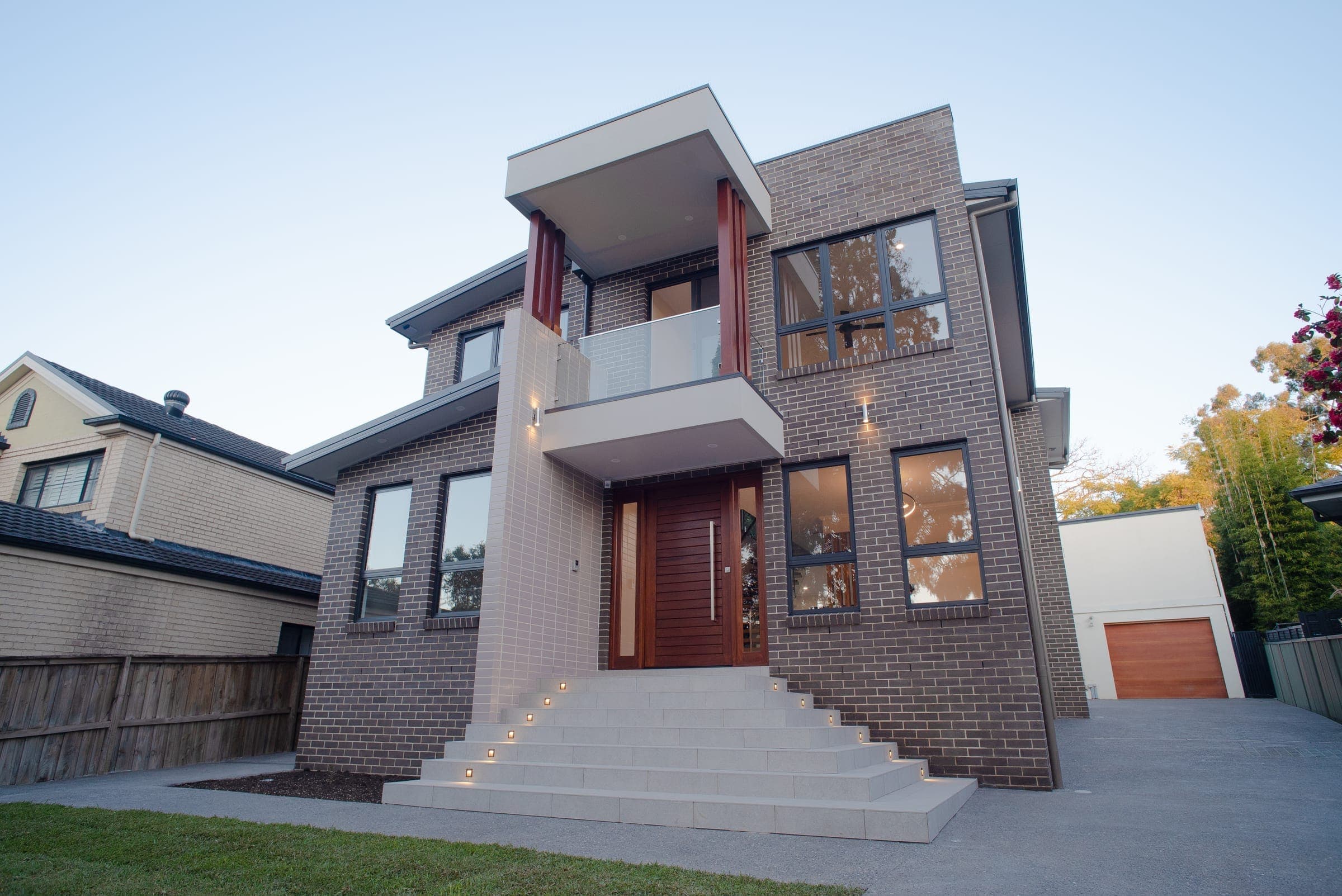
Built for the next fifty years
A tired house replaced by a home designed around how you actually live, and built to perform for decades. The block stays. Everything that was holding it back does not.
Heritage overlay: check before you commit
Sydney has a large number of Heritage Conservation Areas (HCAs) and Heritage Items spread across inner and middle ring suburbs. An HCA does not necessarily prevent demolition, but it requires a DA (not a CDC), a heritage impact statement, and often consultation with council's heritage officer. A Heritage Item listing is more restrictive and may prevent demolition of the primary structure entirely.
Mo Amin checks heritage status, zoning, and planning constraints as part of his initial site assessment. This takes a few days and can save months of design work on a project that turns out not to be feasible as a KDR. We do not start design until the site investigation is complete.
CDC vs DA: which approval path applies
A Complying Development Certificate (CDC) is available for new dwellings on sites that meet the standards in the Housing SEPP. CDC approval is issued by a private certifier and does not require public notification. It typically takes 20 to 30 days. It is the faster and more predictable pathway when available.
A Development Application (DA) is required when the site is heritage-affected, when the proposed development does not meet CDC standards (setbacks, height, FSR), or when the council has specific restrictions. DA timeframes vary significantly by council and by the complexity of the proposal. Applications are lodged through the NSW Planning Portal. We have managed DA processes with Inner West Council, Woollahra Council, and Willoughby Council, among others.
Not sure which path your block falls under? Our guide to planning and approvals in Sydney walks through CDC, DA, heritage and the typical timeframes, and we confirm your pathway at the site assessment before you spend a dollar on design.
Demolition, asbestos, and utility disconnections
Demolition in Sydney typically takes two to four weeks once approvals are in place. Utility disconnections (electricity, gas, water, sewer) need to be arranged in advance and can take four to six weeks to organise with the relevant providers. We manage the disconnection schedule as part of the knock-down rebuild process, step by step.
Pre-1990 homes almost always contain some asbestos, typically in fibro sheeting, eaves lining, or floor materials. A pre-demolition asbestos survey identifies the quantity and type before we get a demolition quote. Asbestos removal adds cost and time to the demolition phase, but is not unusual for a Sydney KDR. We factor it into the budget at the feasibility stage so there are no surprises.
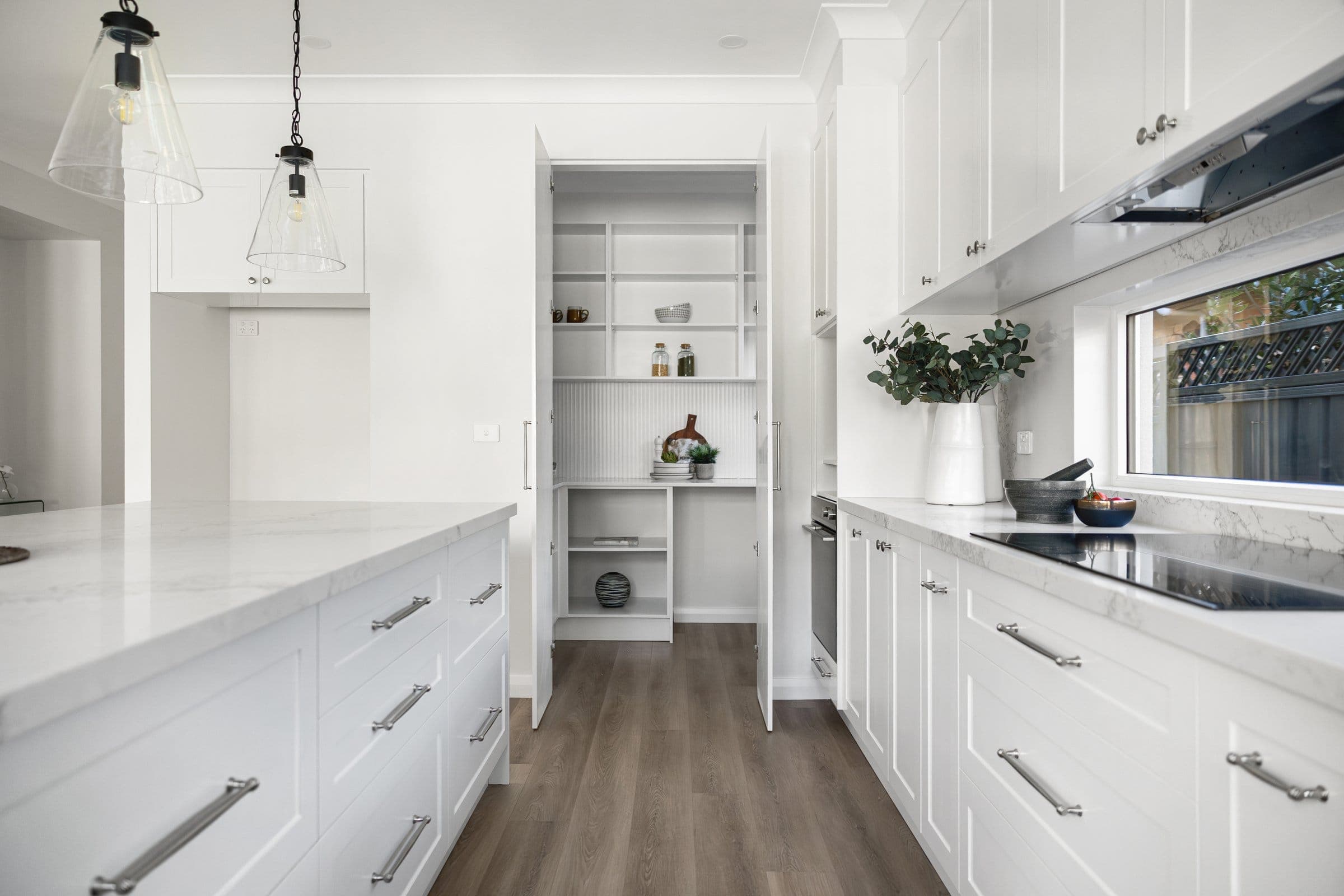
A fresh slab is the cleanest path to a passive house
No existing structure to work around. The thermal envelope is designed from the ground up, so the home holds a steady 20 to 25 degrees year round and draws clean, filtered air into every room.
KDR and passive house: the best combination
A knock-down rebuild is the cleanest opportunity to build a passive house. You have a fresh slab, no existing structure to work around, and full control over orientation, insulation, and window placement from day one. The thermal envelope can be designed without compromise. Ibrahim Amin, as Certified Passive House Tradesperson, manages the passive house airtightness and thermal detailing from the ground up on every KDR we take on.
The result is a home that sits at a steady 20 to 25°C year-round, uses approximately around 80% less energy than a standard new build, and needs far less heating and cooling. Investing in a properly designed passive house envelope rather than oversized mechanical systems is a straightforward long-term decision.
A knockdown rebuild, toured in full.
Sam and Alica chose a knockdown rebuild at Riverwood with a certified Passive House at the top of their list. Walk through the finished home and hear what made the difference for their family.
Common questions
How much does a knock-down rebuild cost in Sydney?
+
A knock-down rebuild in Sydney involves demolition costs ($15,000 to $40,000 depending on the size of the existing home and whether asbestos is present), plus the construction cost of the new home. Marvel Homes builds new homes on KDR sites with construction budgets from $900K to $2M+. The total project cost also needs to account for alternative accommodation during the build (construction runs around 62 weeks, so allow around 15 months from demolition to handover). Mo will walk through all the cost components with you before you commit.
How long does a knock-down rebuild take in Sydney?
+
Construction of the new home runs around 62 weeks. Before construction, allow around 6 weeks for design development, around 4 weeks for colours and selections, two to four weeks for demolition, and approvals running from 6 weeks (CDC) to 4 months (council DA). Heritage listings or complex DA processes can extend the approvals phase.
Do I need a DA or can I use CDC for a knock-down rebuild in Sydney?
+
A Complying Development Certificate (CDC) is available for knock-down rebuilds where the site meets the standards in the State Environmental Planning Policy (Housing). CDC approval is faster (typically 20 to 30 days) and does not require neighbour notification. However, many Sydney blocks are not CDC-eligible: Heritage Items cannot use CDC, Heritage Conservation Area listings usually require DA, sites with contamination issues require DA, and some councils have additional restrictions. Mo assesses the correct approval pathway at the site investigation stage, before you spend money on design.
What happens with heritage overlays on a knock-down rebuild site?
+
Heritage overlays in Sydney come in two forms: Heritage Items (a specific building is listed) and Heritage Conservation Areas (the streetscape character is protected). A Heritage Item listing typically prevents demolition of the primary structure. A Heritage Conservation Area may still allow demolition if the existing building is not a contributory item, but requires a DA and a heritage impact statement. We check heritage status as one of the first steps in our site investigation. Many Sydney blocks in the Inner West, Eastern Suburbs, and inner North Shore have HCA listings, and we have experience navigating the DA process in these areas.
Can I build a passive house on a knock-down rebuild site?
+
Yes, and a KDR site is actually the best opportunity to build a passive house. You start from a fresh slab, which means you can design the thermal envelope from the ground up with no compromises from an existing structure. The insulation can be continuous, the slab can be thermally broken, and the window placement can be optimised for orientation without working around existing openings. Ibrahim Amin, our mechanical engineer and CPHT, manages the passive house airtightness and thermal detailing from the site conditions up, not retrofitted onto a pre-existing frame.
What do I need to know about asbestos in a Sydney demolition?
+
Homes built before 1990 in Sydney frequently contain asbestos, most commonly in wall sheeting (fibro), roofing, and floor materials. Asbestos removal must be conducted by a licensed asbestos removalist and disposed of at an approved facility. The cost depends on the quantity and type of asbestos (bonded or friable). We factor asbestos removal into the demolition budget based on a pre-demolition asbestos survey, which we recommend before committing to a KDR.
Is it a fit
Five to eight homes a year, by choice.
That means we are honest about fit before you spend. Here is who a knock-down rebuild tends to be right for, and who it is not.
- Your budget is in the $900K to $2M+ range for construction, and you want it spent well.
- You want it built properly, and can plan around a construction program of about 62 weeks.
- You value measured comfort, health, and running cost over the lowest headline price.
- Lowest price is the deciding factor, ahead of comfort, health or how the home performs.
- You need a fixed build price before your site and plans have been worked through.
- You are after a project-home or off-the-plan build, not a one-off custom home.
Our build program runs about 62 weeks start to finish. That is real calendar time: it already allows for the December and January shutdown and for weather, so the actual build is shorter than it sounds. You get firm dates up front, so you can plan your finances and any rental around them.
Not sure where you sit? The lowest-risk first step is a builder-agnostic site assessment. You own the report, whoever you build with.
Start with the site, not the sales pitch.
We will check the heritage status, confirm the approval pathway, and tell you quickly whether your knock-down rebuild is feasible and what it is likely to cost.