

Healthy home builder, Sydney.
The air inside your home is what your family breathes every day. A healthy home is not a wellness add-on or an air purifier in the corner. It is built into the structure, and Marvel Homes builds it in from the first line.
Why it matters
We spend most of our lives inside the homes we build.
Of our time is spent indoors
Indoor air can be more polluted than outdoor
ACH, Passive House standard
Sources: US EPA · Passive House Institute
We accept this everywhere else. Offices, hospitals and shopping centres are all mechanically ventilated and filtered to a formal standard, because we expect clean, tempered air in the buildings we pass through. Yet the home we spend about 69% of our lives inside is usually the least controlled building we occupy. When a Harvard team improved office ventilation, workers’ cognitive scores rose 61% on average. A passive house simply brings that standard of care home.
Sources: Klepeis et al. 2001, NHAPS (US EPA) · Allen et al. 2016, Environmental Health Perspectives (Harvard) · ASHRAE 62.1 / 170
Passive house construction is how you fix this. The envelope is sealed, and fresh outdoor air is continuously filtered and brought inside, so the air your family breathes stays clean year-round, with none of the recirculated, stale air a standard home relies on. See how it works.
How it is built
Six things that make a home healthy.
Health is not one feature. It is the result of building the envelope and the ventilation correctly, so the air, temperature, and humidity look after themselves.
Continuous fresh air
A heat recovery ventilation (HRV) system exchanges stale, humid indoor air for fresh filtered air all day, every day, without opening a window to traffic, pollen, or noise.
No condensation or mould problems
An airtight, thermal-bridge-free envelope removes the cold surfaces and moisture traps where mould grows. The problem is designed out, not cleaned up.
Stable temperature, gentle humidity
A steady 20–25°C throughout the home means no cold bedrooms in winter and no overheating in summer. Because comfort comes from the envelope and gentle ventilation rather than a drying air-conditioner blast, the air holds a steadier humidity, which dermatology research links to a calmer skin barrier and fewer eczema flare-ups.
Filtered, not just opened
Fresh air enters through an F7-grade filter that captures around 98–99% of pollen and cuts fine-particle (PM2.5) exposure by roughly two-thirds, and a HEPA upgrade holds indoor air at healthy levels even in bushfire smoke. For allergy and asthma sufferers, that is the difference that gets noticed first.
Healthier materials
Low-VOC paints, sealants, and finishes reduce the chemicals released indoors, specified as part of the build rather than left to chance.
Quiet and dry
The same sealed envelope that keeps air clean also keeps noise out and humidity controlled. A calmer, drier, healthier place to live.
Filtration figures: REHVA Journal (F7 / ISO 16890 filtration). Bushfire smoke: Australian Passivhaus Association. Humidity and skin barrier: Engebretsen et al. 2016, J Eur Acad Dermatology & Venereology.
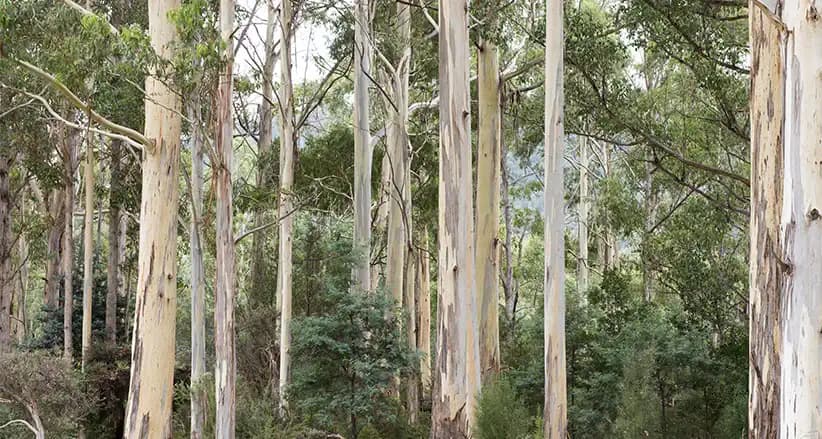
Filtered, continuously renewed air in every room. The freshness of the outdoors, without the pollen, dust or smoke.
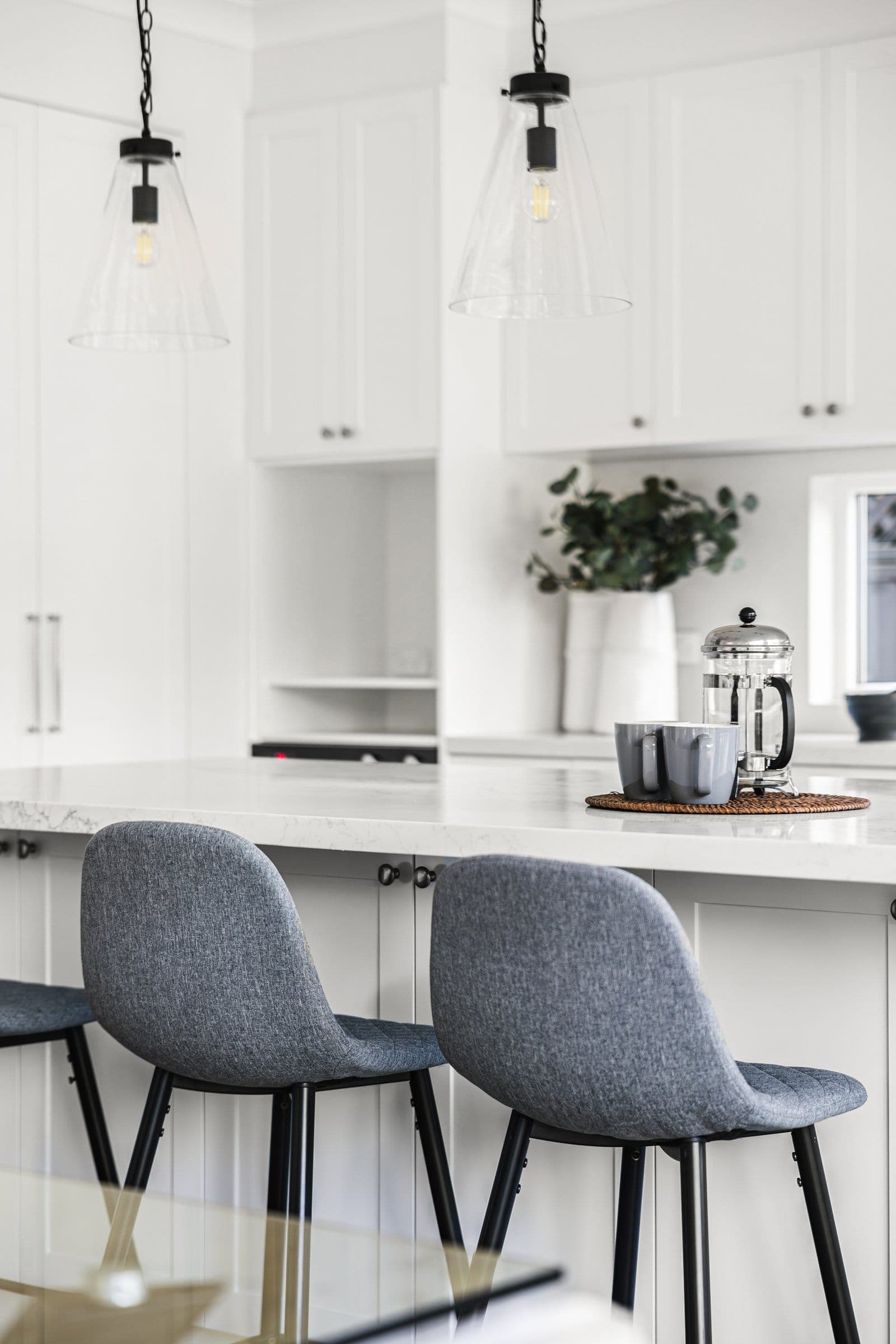
“The humidity is controllable and I don’t worry about mould and mildew after winter anymore. It rains all week and we feel no dampness inside. We no longer blast the heater or aircon and worsen my son’s eczema. We haven’t just built a house, we’ve invested in our family’s health.”

Clean air, steady warmth, and quiet. A home that feels calm the moment the door closes.
Common
questions
Healthy homes, answered.
What makes a home healthy to live in?
+
A healthy home maintains a stable, comfortable temperature year-round, supplies continuous fresh filtered air, and has no condensation or mould problems. Passive house construction delivers all three through airtightness, continuous insulation, and a heat recovery ventilation (HRV) system, rather than relying on opening windows or running air conditioning.
How do I build a mould-free home in Sydney?
+
Mould grows where moisture collects on cold surfaces, in wall cavities, around windows, and in poorly ventilated rooms. The fix is not better paint or more cleaning; it is a correctly sealed, thermal-bridge-free envelope combined with mechanical ventilation that continuously removes humid air and replaces it with fresh filtered air. Marvel Homes builds to passive house standard with blower-door-tested airtightness, which removes the cold surfaces and moisture traps that cause mould.
Can a healthier home help with allergies and asthma?
+
Many families report a clear improvement. A passive house filters all incoming air, removes the damp and mould that trigger respiratory problems, and keeps pollen and outdoor pollutants out because fresh air enters through filters rather than open windows. One Marvel family rebuilt as a certified passive house specifically because of allergies; the problem resolved after moving in.
Is a healthy home the same as a passive house?
+
A certified passive house is the most reliable way to build a genuinely healthy home, because the same features that make it energy efficient, airtightness, insulation, and heat recovery ventilation, are exactly what deliver clean air, stable temperature, and no condensation or mould problems. Health is not a separate add-on; it is built into the standard.
What materials make a home healthier?
+
Low-VOC paints, sealants, and finishes reduce the chemicals released into indoor air, and moisture-managed assemblies prevent the damp that breeds mould. But materials are only part of it: without airtightness and proper ventilation, even the best materials sit in stale, humid air. Marvel Homes specifies healthy materials within an envelope engineered to keep the air clean.
Is it a fit
Five to eight homes a year, by choice.
That means we are honest about fit before you spend. Here is who a healthy home tends to be right for, and who it is not.
- Your budget is in the $900K to $2M+ range for construction, and you want it spent well.
- You want it built properly, and can plan around a construction program of about 62 weeks.
- You value measured comfort, health, and running cost over the lowest headline price.
- Lowest price is the deciding factor, ahead of comfort, health or how the home performs.
- You need a fixed build price before your site and plans have been worked through.
- You are after a project-home or off-the-plan build, not a one-off custom home.
Our build program runs about 62 weeks start to finish. That is real calendar time: it already allows for the December and January shutdown and for weather, so the actual build is shorter than it sounds. You get firm dates up front, so you can plan your finances and any rental around them.
Not sure where you sit? The lowest-risk first step is a builder-agnostic site assessment. You own the report, whoever you build with.
Build a home that looks after your family.
A certified passive house is the most reliable way to build a genuinely healthy home. Start with a conversation about your block and brief.
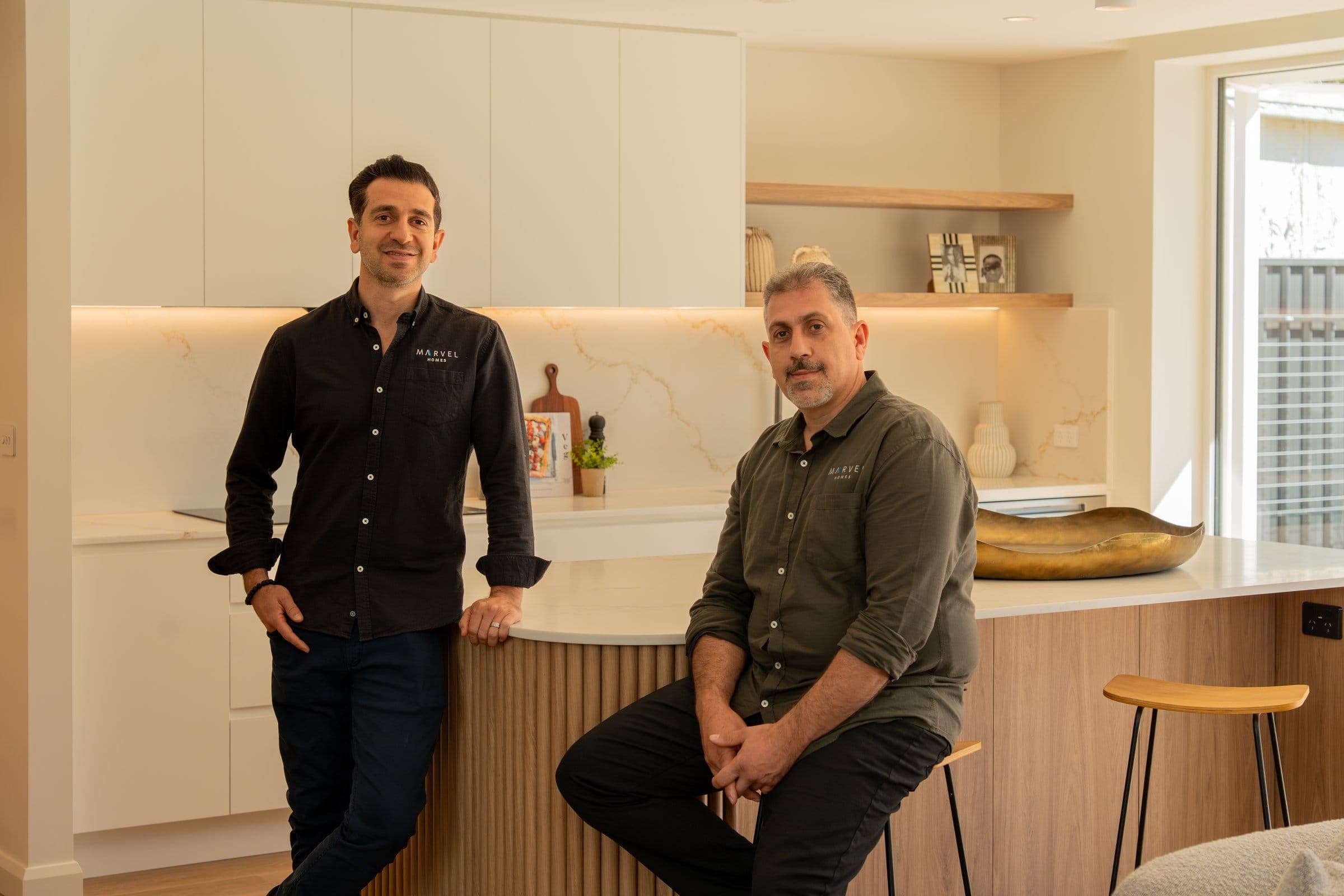
Mo Amin + Ibrahim Amin
Engineers · Licensed Builders · Certified Passive House Tradesperson