
Building your first home in Sydney, explained properly.
Most guides hand you a checklist. This one hands you the whole map. Before you choose how to build, you need to see how the pieces fit together: the levers you are really pulling, and the honest trade-off of every path. Get the map right first, and the rest of the decision gets calmer and clearer. It also protects the three things most guides ignore: your money, your time, and the relationship you build the home in.
In this guide
About a 20 minute read. Jump to any part.
- 01What you're really trading off in any home↓
- 02Nine honest ways into a home, with the real catch of each↓
- 03Who you actually need to build, and who runs them↓
- 04The two timing mistakes that cost the most↓
- 05What we build, and when we're the wrong fit↓
- 06Does a big builder actually keep you safe?↓
- 07Why the cheapest home costs more to own↓
- 08Can you skip passive house and bolt on upgrades?↓
- 09First-time builder questions, answered↓
How to think about it
Every way to get a home is the same six levers, set differently.
Buy, build, off-the-plan, house and land, custom, knock down and rebuild. They are not separate worlds. They are the same six levers, turned up or down. No single path wins every lever, and once you can see them, the noise goes quiet and the choice becomes yours.
- 1
Control. How much say you have over the layout, the spec, and the decisions.
- 2
Cost certainty. How fixed your price really is before you commit.
- 3
Design freedom. How much the home is shaped around your block and your life, not a template.
- 4
Performance and health. How comfortable, healthy, and cheap to run the home is once you live in it.
- 5
Time. How long from decision to moving in.
- 6
Risk, and who carries it. When something unexpected appears, who pays and who decides.
Every path is a different setting of the same six levers
One more lever runs underneath all six, and almost no one names it: your emotional bank. The energy and goodwill between you and your partner across a long project. Guard it like part of the budget, because it is. More on that further down.
The entry points
Nine honest ways into a home. Including the ones we do not build.
Wherever you are starting, from a first place off-the-plan to a knockdown rebuild of a forever home, here is the whole map: every common path, with the real upside and the real catch. We build two of them, and we can partner on a third when you already have an architect you love. We are still going to tell you the truth about all of them, because you deserve to choose with your eyes open.
Buy an established home
Best for: People who want to move in now and value certainty over customisation.
The upside
You see exactly what you are getting, and can visit at different times of day before you buy. Older problems have usually had time to surface.
The catch
The home was built for someone else, and homes built before 2006 were not required to meet any energy target in the National Construction Code. Comfort, running costs, and orientation are mostly fixed, and changing them later is expensive.
FavoursTime and cost certainty. Sacrifices design freedom and, often, performance.
Buy off-the-plan
Best for: Buyers who want a new home at a lower entry price and accept a fixed menu of choices.
The upside
Often a cheaper way to buy new. Volume design typically costs less per square metre than a custom-designed and built house, because it is built to a formula with economies of scale.
The catch
Your choices are limited, and some companies reuse the same design in every climate zone, which can make it a poor fit for yours. Timelines slip, and preliminary deposits are frequently non-refundable while you wait.
FavoursCost certainty and a lower entry price. Sacrifices control, design freedom, and performance.
House-and-land package
Best for: Buyers who want a new free-standing home at the lowest headline price and will keep to a standard design.
See project home builder→The upside
The most affordable route to a brand-new detached house. Streamlined, repeatable, and quick when nothing changes. These packages are almost always delivered by a project (volume) home builder, the next path.
The catch
The headline price is rarely the final price. The common complaints are site costs added after you commit, and selection upgrades priced well above retail once you are locked in. The honest move is to have a builder pricing the design as it develops, not to tender finished drawings and chase the cheapest number.
FavoursLowest up-front cost and speed. Sacrifices control, design freedom, performance, and often real cost certainty.
Project (volume) home builder
Best for: People who want a new home for the lowest price and are happy choosing from a fixed range of standard designs and finishes.
The upside
The most affordable and predictable way to build new. A volume builder repeats a small set of proven designs at scale, so the price per square metre is usually the lowest on the market and the process is streamlined. They deliver most house-and-land packages, and many also offer knockdown-rebuild packages on your own block.
The catch
The low headline price relies on you staying inside their standard range. Site costs and upgrades are commonly added after you commit, and selections are often priced above retail once you are locked in. The same design is repeated across very different climates, so the home is rarely oriented or tuned for your block, and performance is usually built only to the minimum the National Construction Code requires. Adding real performance on top later is not a clean bolt-on.
FavoursLowest price and speed. Sacrifices design freedom, performance, and often real cost certainty.
Custom: your own architect plus a separate builder
Best for: People with a strong design vision who want a bespoke home and an independent designer.
Working with your architect→The upside
A home shaped entirely around you, with a designer leading the creative. The ceiling on quality and individuality is the highest of any path.
The catch
The designer gives an opinion of probable cost, but does not carry the final build cost. If the builder only arrives at tender, the first real price can land far above budget after a year of fees. The fix is to bring a builder in during design. That is exactly how we join this path: when you already have an architect you love, we come in early as your builder, so the home is priced honestly and made buildable as it is drawn, without taking over the creative.
FavoursControl and design freedom. Risk on cost certainty unless a builder is involved early.
Custom integrated design-and-build
Best for: People who want a bespoke, high-performance home and one accountable team from first sketch to handover.
The upside
Design and construction sit at the same table, so the home is priced honestly as it is drawn, buildability is solved early, and performance is engineered in, not bolted on. One contract, one team, no gap for problems to hide in.
The catch
It is not the cheapest or the fastest path, and it asks for patience through a proper pre-construction phase. It rewards people who want to build once and build well, not those chasing the lowest number.
FavoursControl, design freedom, performance and health, and genuine cost certainty. Trades away speed and lowest up-front price.
Knockdown rebuild (KDR)
Best for: People who love their location but not their house, where renovation cannot fix the real problems.
The upside
You keep the suburb, the school, the neighbours, and the land, and you get a brand-new home designed for how you actually live, with modern performance and health built in from the slab.
The catch
You carry demolition, approvals, and the same custom-build discipline as any new build. Volume builders also offer knockdown-rebuild packages, so the difference is the build discipline through design, not the demolition itself. When the numbers are laid out honestly, many people in this position find a rebuild is the better long-term decision.
FavoursControl, design freedom, and performance, on land you already love. Trades away speed.
Major renovation
Best for: People who love the bones and the location of their current home and want to update layout, flow, and finishes within the existing structure.
Renovate or rebuild?→The upside
You keep the home you already have, it is often less disruptive than a full rebuild, and for the right house it can cost less than building new.
The catch
The existing structure sets a ceiling. A renovation can reconfigure rooms and refresh finishes, but it cannot change orientation, the thermal envelope, or deep structural inefficiency, the very things that decide comfort, health, and running costs. A large renovation can also creep toward rebuild money without reaching rebuild performance.
FavoursKeeping what you have, with less disruption. Trades away the performance and design ceiling of a new build.
Owner-builder
Best for: People with the time, construction knowledge, and risk appetite to manage their own build, holding the owner-builder permit and coordinating the trades directly.
The upside
You keep full control and remove the builder's margin from the headline cost. For the right person with real construction experience, it can save money and deliver exactly what you want.
The catch
You become the builder. In NSW you need an owner-builder permit once the work needs approval and exceeds $10,000, plus the accredited owner-builder course and a White Card above $20,000. You carry the full legal and safety responsibility, you coordinate and stand behind the trades yourself, and home-warranty cover works differently. Lenders are often more cautious, and only one permit is issued in any five-year period. Most first-timers underestimate the time, the learning curve, and the toll on the emotional bank.
FavoursMaximum control and a lower notional cost. Trades away certainty, protection, and a great deal of your time and risk.
The part no one explains
A custom home or a knockdown rebuild is a team sport. The real question is who captains it.
Most of our clients are right here: building new, or knocking down and rebuilding. A new build is not one decision. It is a dozen specialists who all have to point the same way. You can find every one of them online in an afternoon. The hard part is engaging them in the right order, asking the right questions, and keeping them aligned, without quietly becoming the project manager of your own build.
The cast: who does what
Designer or architect
Turns your brief into the drawings council and the builder work from. In NSW, architect is a legally protected title; building designer is not, so qualifications and insurance vary. Both can design an excellent home. Just check who you are dealing with.
Town planner
Advises what the site actually allows and builds the planning case, especially where the block is tricky: heritage, overlays, or a full council DA rather than a fast-track CDC.
Surveyor
Measures the land (levels, boundaries, contours) so everyone designs off reality, not a guess.
Geotechnical engineer
The soil test that drives your footing and pier design.
Structural / civil engineer
Designs and certifies the slab, footings, and structure.
Hydraulic / stormwater engineer
How water leaves the site: stormwater, and on-site detention where the council requires it.
Energy assessor (BASIX / NatHERS)
The energy rating your approval depends on. New NSW homes must now meet a 7-star standard. What 7-star means
Building certifier
Independently signs off that the build is approved and compliant, and issues the occupation certificate. A regulated role, not the builder marking their own homework.
Interior designer
The finishes, joinery, and selections that make it feel like yours.
Your builder
In NSW, anyone contracting residential building work over $5,000 must hold a contractor licence. Always check it on the public register before you sign.
Self-coordinate
You, or your architect, engage each consultant separately and hand a finished package to a builder to price. You get maximum design control and documents assembled by people you trust. But you become the hub. Every gap between consultants is yours to catch, and when you hand those documents over, the builder builds what they say. Anything missed comes back as a variation, because the documentation risk was yours.
Tap into a team
You engage one team that already carries these relationships and runs them in the right order, so the coordination, the clashes, and the sequencing are their job, not yours. You give up being the sole author of every document. You gain a learning curve you did not have to climb alone. Neither path is right or wrong. It is a genuine trade.
The cost nobody puts in the budget
There is a cost to building that no quote ever shows: the emotional bank between you and your partner. It starts full. Then the rabbit holes appear, things cost more or take longer, and with many consultants each pulling their own direction it gets hard to know where true north is for your family. That account drains quietly. Protecting it matters as much as protecting the budget.
So the real question is not how the industry works. It is how your family's situation gets solved. Start with what you want the home to deliver while you live in it, spend real time in pre-construction so you commit without the what-if questions, then find a team already delivering on those exact goals.
A simple way to test a team
Meet two or three builders or consultants and look closely at their process and their documentation, not just their finished photos. Almost anyone can talk and sell. Very few are genuinely organised and efficient, and that difference is the whole game. It shows up in how they document and sequence a project, long before it shows up on site.
.jpg&w=3840&q=75&dpl=dpl_A4E6S8vNNtuTuaiLpMtQ7Gnyz8fu)
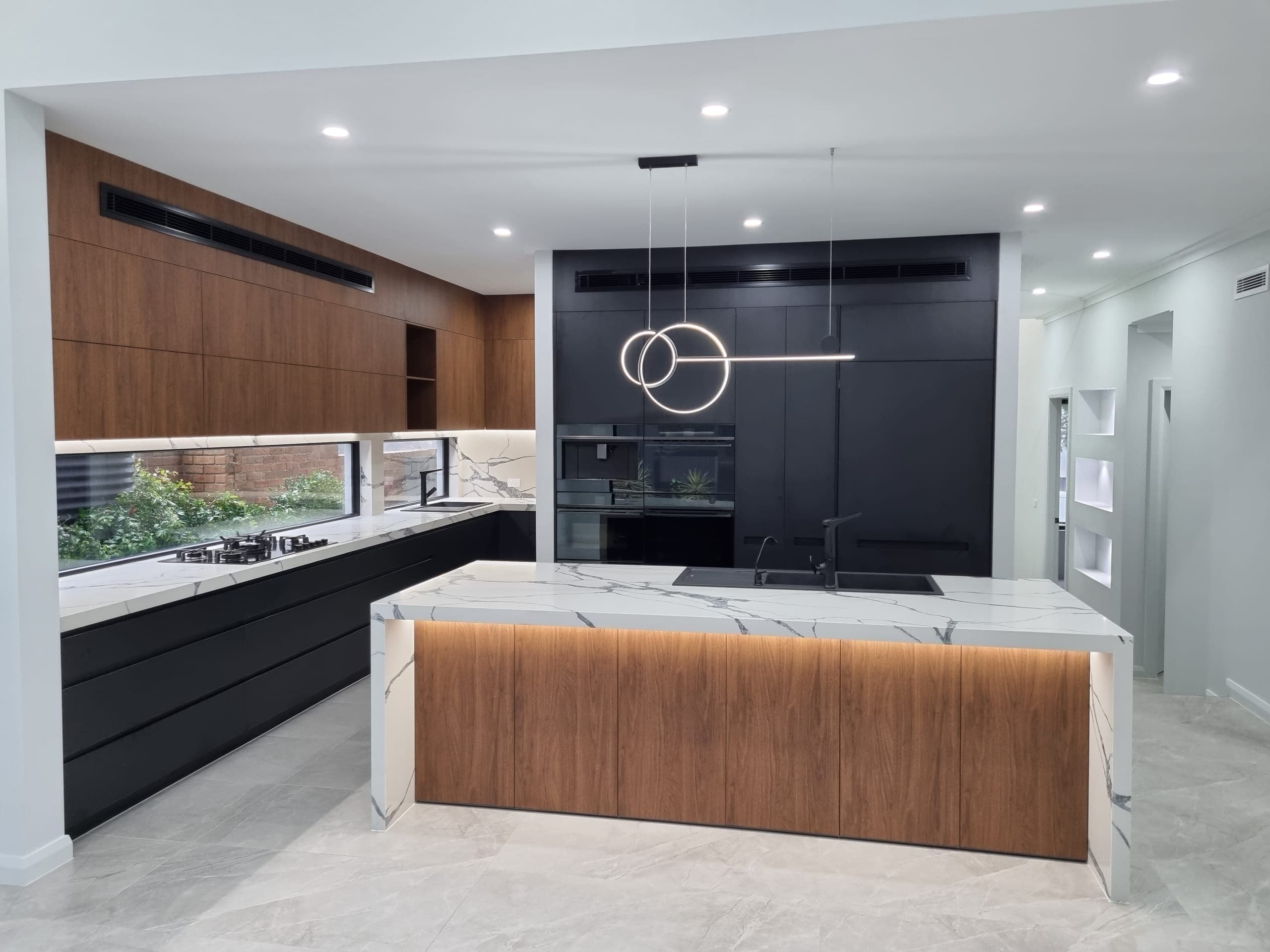
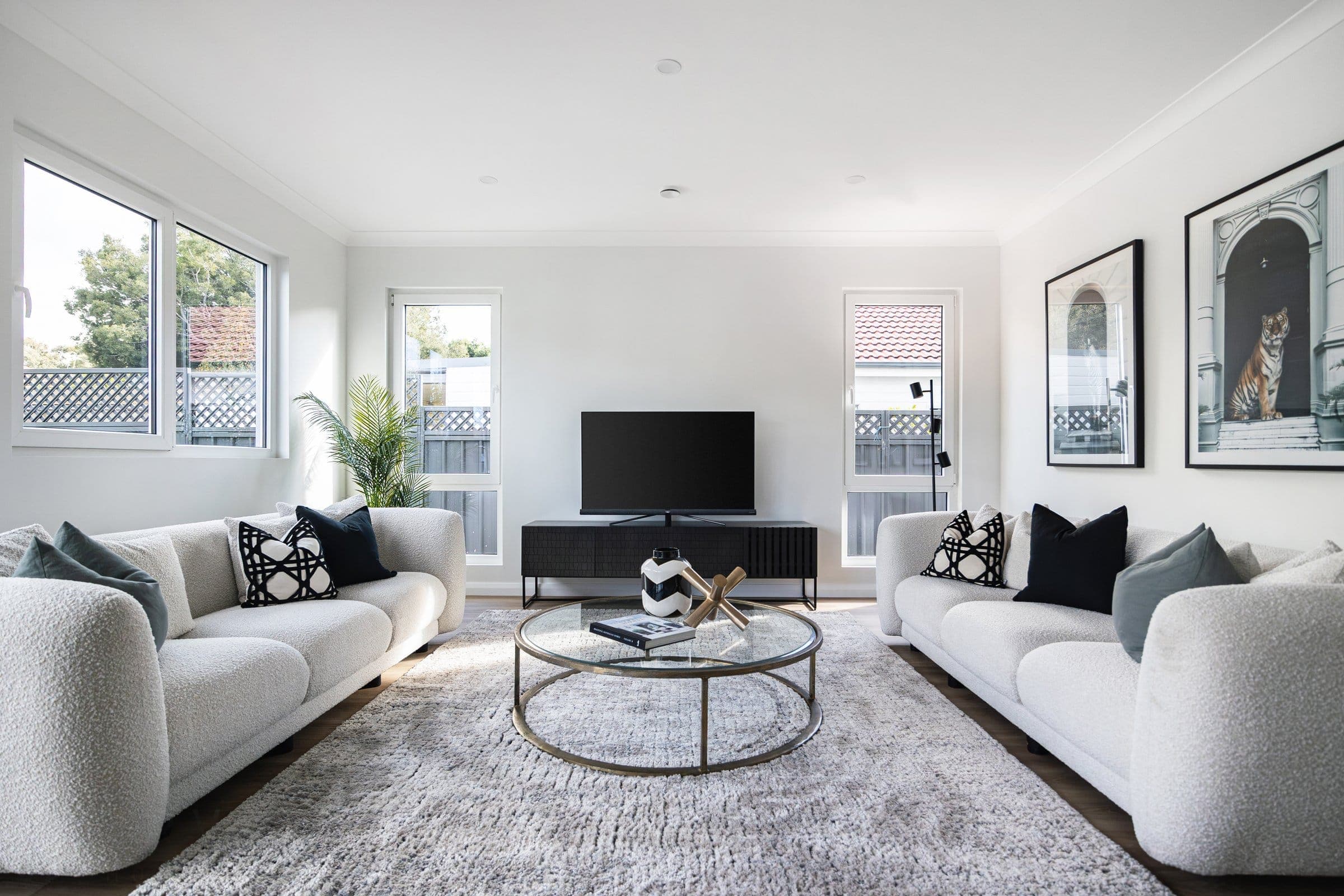
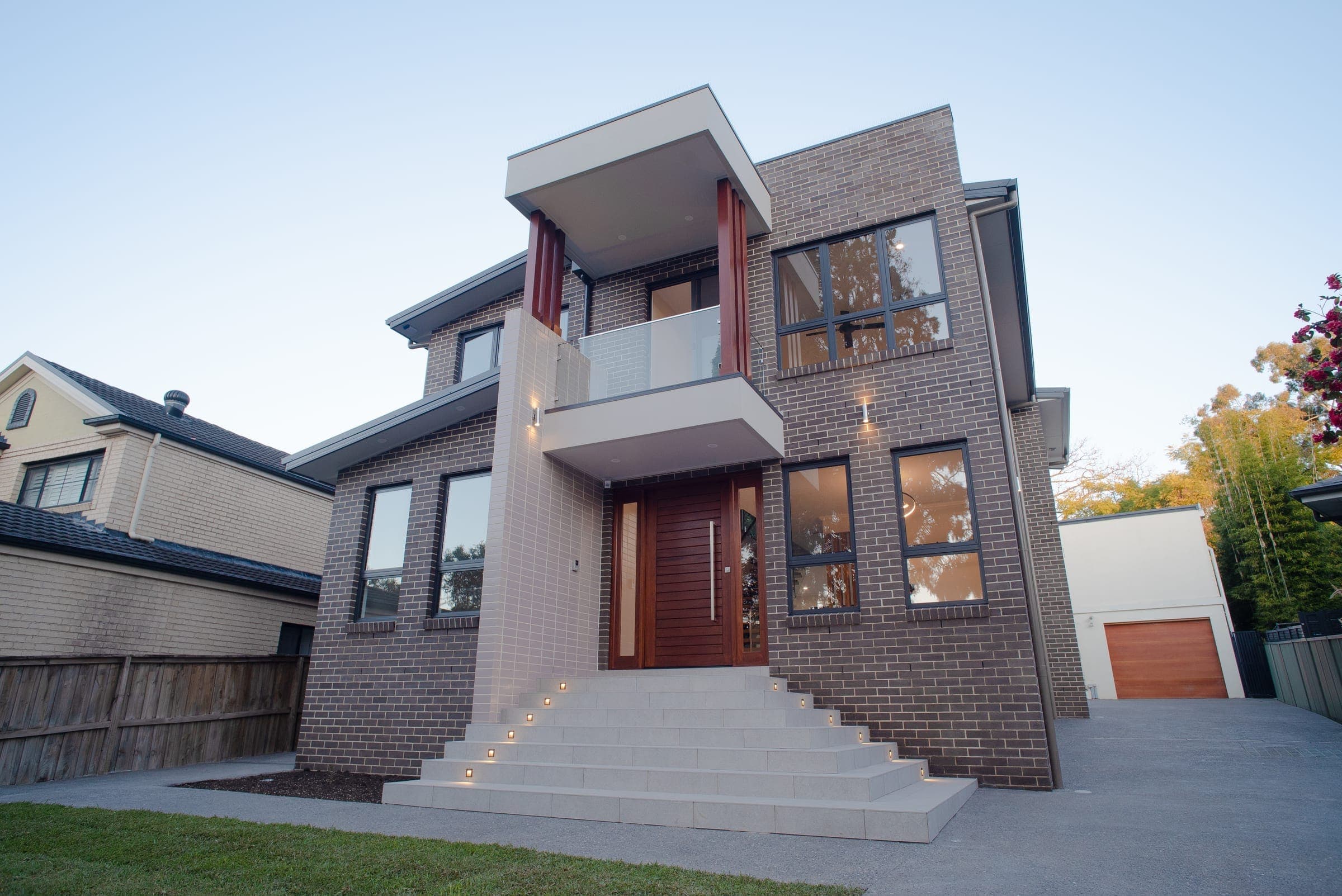
Recent Marvel Homes builds across Sydney. Each started exactly where you are now. View all projects →
Being straight with you
We build two of these nine paths. Here is exactly which.
What we do: custom integrated design-and-build, and knockdown rebuilds, for families who want a healthy, high-performance home done once and done right. We are two UNSW-trained engineers, a civil and a mechanical, both licensed builders, and we stay personally on every project from slab to handover. We design and build as one team, and when you already have an architect you love, we partner with them instead of taking over. Every qualifying home is built to the Passive House standard and independently certified by a third-party certifier.
What we are not: we are not a volume or project-home builder, we do not sell off-the-plan, and we do not offer an owner-builder service. We deliberately build only five to eight homes a year, because the model depends on us being personally present, not on volume.
And be honest about price. If price is your top priority, the market will always have a provider who says yes. That is the easy part. The hard part is what happens when the rubber meets the road. On a bespoke rebuild in an established location, a provider working to the lowest price will naturally do the bare minimum, because their time on your project is limited. If you understand that trade, go for it. But if this is a forever home and you are spending well over a million dollars, a brand name and crossed fingers is not good enough.
The de-risking myth
“A big brand will keep me safe.” It is the most expensive assumption in building.
The fear is real and worth saying out loud. People choose a large, long-established builder because it feels safe. The brand has been around for years, so surely the house gets finished, and you will just stay on top of their supervisor. The flip side is the worry about a smaller custom builder: that they run the business out of a ute, that they could go under, and that you will be left with half a house.
~27%
of all Australian company collapses in 2023-24 were construction, the largest share of any industry.
3,595
construction insolvencies in 2024-25, a record high, up around 21 percent on the year before.
1,700+
families left with unfinished homes when Porter Davis, a major volume builder, collapsed in 2023.
Part of that instinct is fair. Construction is the most insolvency-prone industry in Australia, around 27 percent of all company collapses in 2023-24, and a record number of builders failed the following year. Roughly four in five were small. Builders do go under, and we are not going to pretend otherwise.
But size is not safety. When Porter Davis collapsed in 2023, one of the largest volume builders in the country, about 1,700 families were left with unfinished homes, some on a bare slab, and another 779 had paid deposits the builder had never insured. It was the biggest builder collapse in the state's history. A long history and a big logo protected no one. There is no such thing as a guaranteed builder.
What actually protects you, with any builder
In NSW, Home Building Compensation cover is required for work over $20,000 and pays out up to $340,000 if your builder dies, disappears, or becomes insolvent. Your builder must hand you the certificate of insurance before you pay a single dollar, including the deposit, and the deposit is capped at 10 percent. Beyond that, the real protection is unglamorous: a documented fixed-price contract, payments staged against work that is actually complete, a licence you have checked, and a builder whose process and books are in order. None of that is about brand size.
Here is the trap underneath the fear. You are trying to remove the risk of one or two years of construction. Fair enough. But the “big brand, I'll just manage them” mindset usually trades away the thing you live inside for the next thirty years: a home that is healthy, comfortable, and cheap to run. You can avoid the insolvency you were scared of and still end up in a house you quietly regret.
Both risks are real. Manage the build risk with documents and insurance, the tools that work for any builder. Do not pay for it with the rest of your life in the home. And remember the safety a brand cannot sell you: with a custom builder you meet the people who will actually build your home, because they are in the room while it is designed. That visibility, not a logo, is what tells you a build is in safe hands.
Still weighing the paths?
The fastest way to tell if a builder is worth your time is to look at how they document and price, not their photos. A short, honest conversation is the lowest-risk first step. We will tell you which entry point fits, even if it is not us.
The bigger picture
The rules changed. Cheap-to-build is quietly becoming expensive-to-own.
The cost of a home has two halves: what you pay to get in, and what you pay every year to live there. For decades, buyers only looked at the first half. That is changing. As the Australian Government's Your Home puts it, affordability is not just about the upfront cost of a home, but how much it costs to run and maintain over the long term, and well-designed efficiency nearly always delivers a better financial outcome over time.
The building code is moving the same way. New homes in NSW must now meet a 7-star energy standard, and the bar keeps rising. Every tightening makes a poorly built cheap home a worse long-term asset, and a genuinely high-performance home a better one.
A home is a thirty-year decision, not a thirty-week one. The cheapest home to build is rarely the cheapest home to own, and almost never the healthiest to live in. The smartest first move is not the lowest number. It is the best decision, and the best decision starts from your family's goals, not from a price.
Why not just upgrade?
“Why not skip passive house and just bolt on the upgrades?”
It is the most reasonable-sounding question in building. Add extra insulation, double glazing, and a bigger solar and battery system, and surely you are in a good place. Here is why the parts rarely add up to the performance, and where the real risk hides.
The order that actually works
Fabric first, solar last
- 1Fabric and insulation
- 2Airtightness
- 3Windows, installed right
- 4Heat-recovery ventilation
- 5Solar and battery
Steps 1–4: built in now
The fabric of the home. Cheap to get right once, and impossible to bolt on later without pulling the house apart.
Step 5: add any time
Even years later.
Performance is assembly, not parts
A double-glazed window in a leaky wall with cold junctions delivers a fraction of its promise. If the frame and install are not right, it can cause condensation rather than prevent it. The result lives in the detailing, which a builder optimised for scale is not set up to deliver.
The half-tight house can grow mould
Add insulation and better windows but skip airtightness and proper ventilation, and you can make a home more prone to mould, not less. You slow the air that used to dry the house out without adding controlled fresh air to replace it. Build tight, ventilate right; do one without the other and you get the worst of both.
Nobody tests a bolt-on
A volume builder will not blower-door test or certify the result, so you are trusting that good parts add up, with no proof. A passive house is modelled, tested toward 0.6 ACH against a typical new home of around 15, and independently certified. You move into the performance promised on paper.
If you are adding solar anyway
A certified passive house uses around 80 percent less energy to heat and cool, so the solar and battery you are buying go much further. In a heatwave or blackout the home holds temperature for days instead of draining the battery running the aircon hard. Spending on generation while ignoring the load is buying a bigger pump for a leaking bucket. The fabric does not compete with your solar money. It multiplies it.
Leaky home
Pour in a lot. It runs straight back out.
Sealed home
A trickle keeps it full.
The water is your comfort and energy. Solar pours it in. A leaky home lets it straight back out.
The honest version
You do not have to build a fully certified passive house. But comfort and health come from the method and the order, not a logo, and you can add panels any time while you can never bolt airtightness or ventilation on later. The genuinely risky middle is paying upgrade prices to a builder whose system was never designed to make them work together.
Common
questions
First-time builders, answered.
Tap a question to open it.
I have never built before. Where do I actually start?
+
Start with what your family values most, not with builders, architects, or the usual industry marketing. Get clear on what this home needs to deliver while you are living in it: health, a layout that fits your life, low running costs, room to grow. Then find providers who already deliver on those values. The mistake we see most is choosing a path for its price, then trying to push your values onto it. People build with a cheap project-home company, then try to add sustainability on top. But performance is not a bolt-on like a stone benchtop. Upgrade to double-glazed windows and the glazing alone will not get you there: if the frames and installation are not right, the outcome is compromised. Pick a team built around your goals from the start.
What is the difference between a volume builder and a custom builder?
+
A volume or project builder repeats a small set of standard designs at scale for the lowest price, with limited choices. A custom builder designs and builds around your block and your life. Volume usually wins on price and speed. Custom wins on control, design freedom, and performance. Government guidance notes volume designs typically cost less per square metre, but can limit your construction system, materials, and suitability for your climate.
How much does it cost to build a custom home in Sydney?
+
At Marvel, our certified passive homes generally start around $900K and run to $2M and beyond, depending on the home. A lot goes into that range: site cost and complexity, client-specific finishes, and the overall complexity of the design. For a first-timer, the number that matters is not the quote you are shown first. It is whether you end up with a documented, specified, fixed-price contract after pre-construction, instead of a low number propped up by vague allowances.
Is a knockdown rebuild better than renovating?
+
It depends on what is wrong with the home. A renovation can fix finishes and layout within the existing structure. It cannot change orientation, the thermal envelope, or deep structural inefficiency. If those are the real problems, a rebuild is often the better long-term decision once the full cost comparison is laid out honestly.
Renovate or rebuild, compared→Should my first home be a passive house?
+
If you are building from scratch, it is the cheapest time you will ever have to build well. A certified passive house costs a little more up front but is far cheaper to run, more comfortable, and healthier to live in. Because the performance is engineered in from the first design, adding it later is expensive or impossible.
What a passive house actually is→What are the most common first-time builder mistakes?
+
Two stand out. The first is letting price drive the decision and choosing on the lowest quote, which usually hides allowances and site costs. The second, just as common, is locking the design in and getting it approved before the build team is involved, so the people who actually price and build the home never shaped it. After those: designing before confirming what the block allows, pricing the design only at the end, underestimating the timeline, and signing a builder's standard contract without understanding it.
Sources
- ↗Australian Government, Your Home: Affordability
- ↗Your Home: Buying an existing home
- ↗Your Home: Buying a home off the plan
- ↗Your Home: Designing a home
- ↗NSW Government: When a builder must be licensed
- ↗NSW Architects Registration Board: Protection of the architect title
- ↗ASIC: Insolvency statistics (construction the largest sector)
- ↗NSW Government: Protecting yourself in case of builder insolvency
- ↗SIRA NSW: Home Building Compensation for homeowners
Not ready to talk yet?
Take the thinking with you.
Leave your email and we’ll send you the parts most first-time builders wish they had known earlier: how to lock in a real price, the order of decisions that protects your budget, and the questions that reveal a builder’s true process. Honest notes from Mo, no sales pressure, and you can unsubscribe anytime.
Start with your goals, not a contract.
Begin with what your family needs this home to deliver, then bring us your block, your budget, and your questions. We will walk you through which entry point actually fits you, even if it is not us. No jargon, no pressure, just an honest read on what is possible.
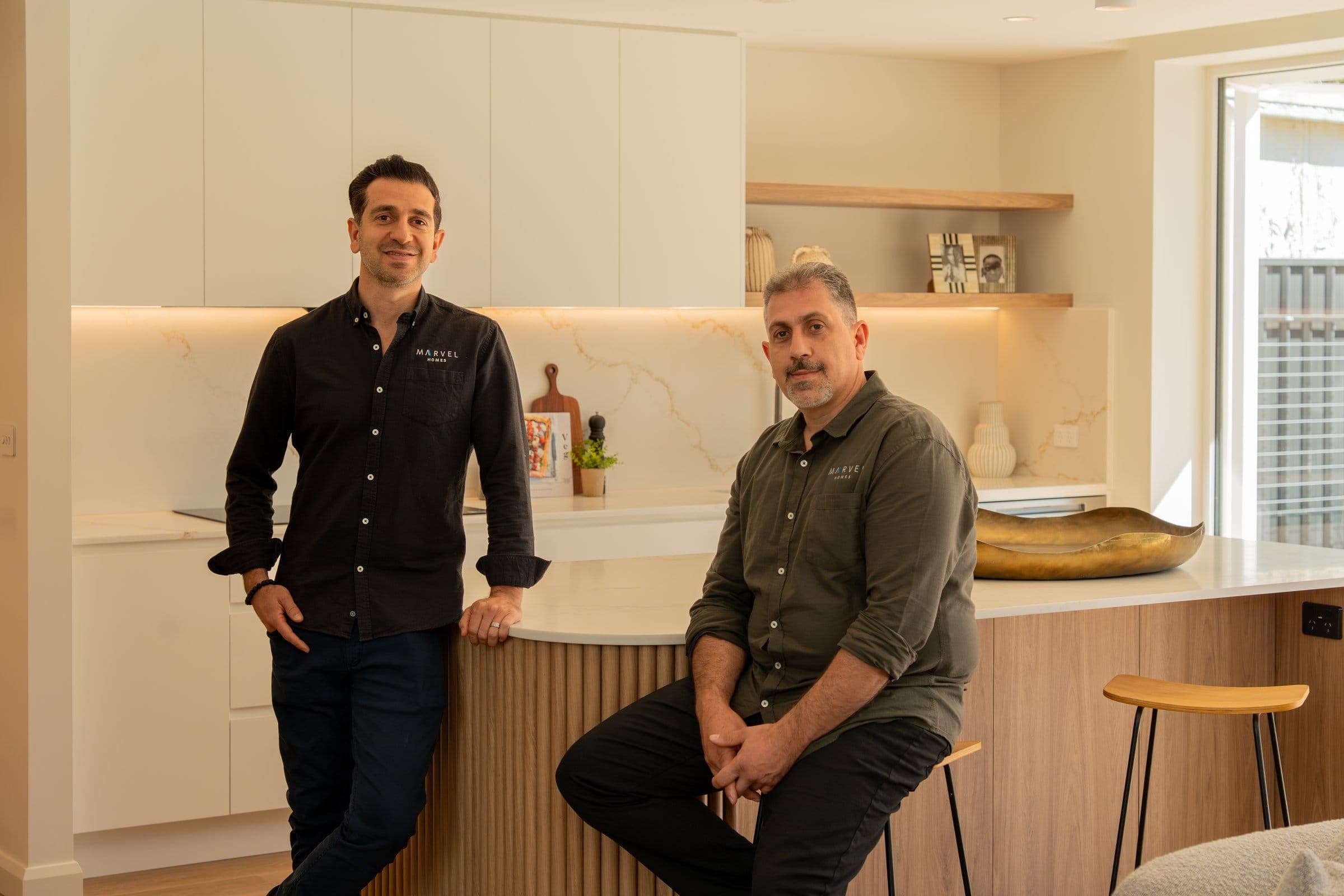
Mo Amin + Ibrahim Amin
Engineers · Licensed Builders · Certified Passive House Tradesperson