
Custom Home Builder
Northern Beaches Sydney
Salt air, coastal humidity, sloping blocks, and bushfire prone land. Passive house handles the coastal environment better than any other standard.
Building on the Northern Beaches
The Northern Beaches is one of Sydney's most desirable coastal locations, stretching from Manly in the south to Palm Beach in the north. The peninsula has a distinctive character: ocean beaches on the east, Pittwater and Broken Bay on the west, and a mix of beach village neighbourhoods and bush-bordered residential streets in between. Building here is not like building in the suburbs. The coastal environment, the topography, and the council planning framework all require experience to navigate correctly.
Northern Beaches Council was formed from the merger of Manly, Pittwater, and Warringah councils. Its DCP requirements are specific to the coastal environment and the strong design character of the area. Understanding what is possible and what is required is part of the site investigation process for every Northern Beaches project we take on.
Coastal passive house: the best combination
A passive house on the Northern Beaches is an unusually good combination. The coastal environment creates exactly the conditions that passive house is designed to manage: salt air, humidity, wind-driven rain, and the requirement for continuous fresh air without opening windows to the outside. The airtight envelope, tested at 0.6 ACH, means these environmental factors are controlled rather than ignored. The HRV system provides filtered fresh air continuously, regardless of the outdoor conditions.
Coastal homes built to standard construction suffer visibly over time: corrosion of fixings, mould inside wall cavities, and condensation on cold surfaces are all common. A passive house eliminates these failure modes by controlling the air and moisture exchange through the building envelope rather than relying on ventilation through gaps.
Bushfire prone land
Parts of the Northern Beaches, particularly in the north around Avalon, Bilgola Plateau, and Ingleside, are mapped as bushfire prone land by the NSW Rural Fire Service. Building on bushfire prone land requires compliance with AS 3959 (Construction of Buildings in Bushfire Prone Areas) and a BAL (Bushfire Attack Level) assessment. Higher BAL ratings require more robust materials and construction details.
The airtight construction of a passive house is naturally well-suited to high BAL environments. Ember entry through gaps in the building fabric is a primary risk in bushfire events, and a passive house envelope has minimal uncontrolled openings. Ibrahim Amin designs the passive house detailing to be compatible with the BAL requirements for each specific Northern Beaches site.
Sloping coastal blocks
Many Northern Beaches blocks fall steeply, particularly on the ocean-side strips where homes are built up the headlands. Access during construction is a real logistical challenge on some of these sites. Mo Amin's civil engineering background includes the structural and civil assessment required for sloping coastal sites: the foundation design for sandstone or fill substrates, the retaining wall design, and the construction programme that works with the site access constraints rather than against them.

Certified passive houses across Sydney, designed for this city's climate and the way we live here.
Common questions
Do you build on the Northern Beaches?
Yes. Marvel Homes builds across the Northern Beaches Council area, including Manly, Dee Why, Collaroy, Narrabeen, Mona Vale, Newport, Avalon, Palm Beach, Freshwater, and Curl Curl. We are familiar with Northern Beaches Council's DCP requirements, the coastal construction specifications required within close proximity to the ocean, and the bushfire prone land requirements that apply to northern parts of the peninsula.
Why is passive house particularly good for coastal homes on the Northern Beaches?
Coastal homes on the Northern Beaches are exposed to salt air, wind-driven rain, and high humidity year-round. A passive house has an airtight envelope tested to 0.6 ACH, which means salt air enters only through the HRV system where it is filtered. Wind-driven rain cannot penetrate the envelope. Coastal humidity is managed rather than freely circulating through the building. The result is a home that has far lower maintenance requirements than a standard coastal home, no salt corrosion inside the walls, and no condensation or mould despite the humid coastal environment.
How do you handle sloping coastal blocks on the Northern Beaches?
Many Northern Beaches blocks, particularly on the mid-beach strips between Manly and Palm Beach, have significant slope. The rock platform close to the surface on some sites means careful foundation design is required, and the access constraints during construction on steep coastal blocks add to the complexity. Mo Amin's civil engineering background means the foundation design, retaining structures, and construction logistics are assessed accurately at the site investigation stage.
What do I need to know about bushfire prone land on the Northern Beaches?
Northern parts of the Northern Beaches peninsula, including areas around Avalon, Bilgola, and Ingleside, include bushfire prone land as mapped by the NSW Rural Fire Service. Construction on bushfire prone land requires compliance with the relevant BAL (Bushfire Attack Level) rating, which affects material selection, window and door specifications, deck construction, and subfloor ventilation. Passive house construction is particularly well suited to high BAL ratings because the airtight envelope naturally resists ember and heat penetration. Ibrahim Amin is experienced with passive house detailing that also meets BAL requirements.
Does BASIX apply to new homes on the Northern Beaches?
Yes, BASIX (Building Sustainability Index) applies to all new residential construction in NSW including the Northern Beaches. BASIX sets minimum benchmarks for energy, water, and thermal comfort. A passive house significantly exceeds all BASIX requirements. In fact, the passive house standard is substantially more stringent than BASIX demands, so meeting BASIX compliance is a straightforward outcome of the passive house design process, not an additional hurdle.
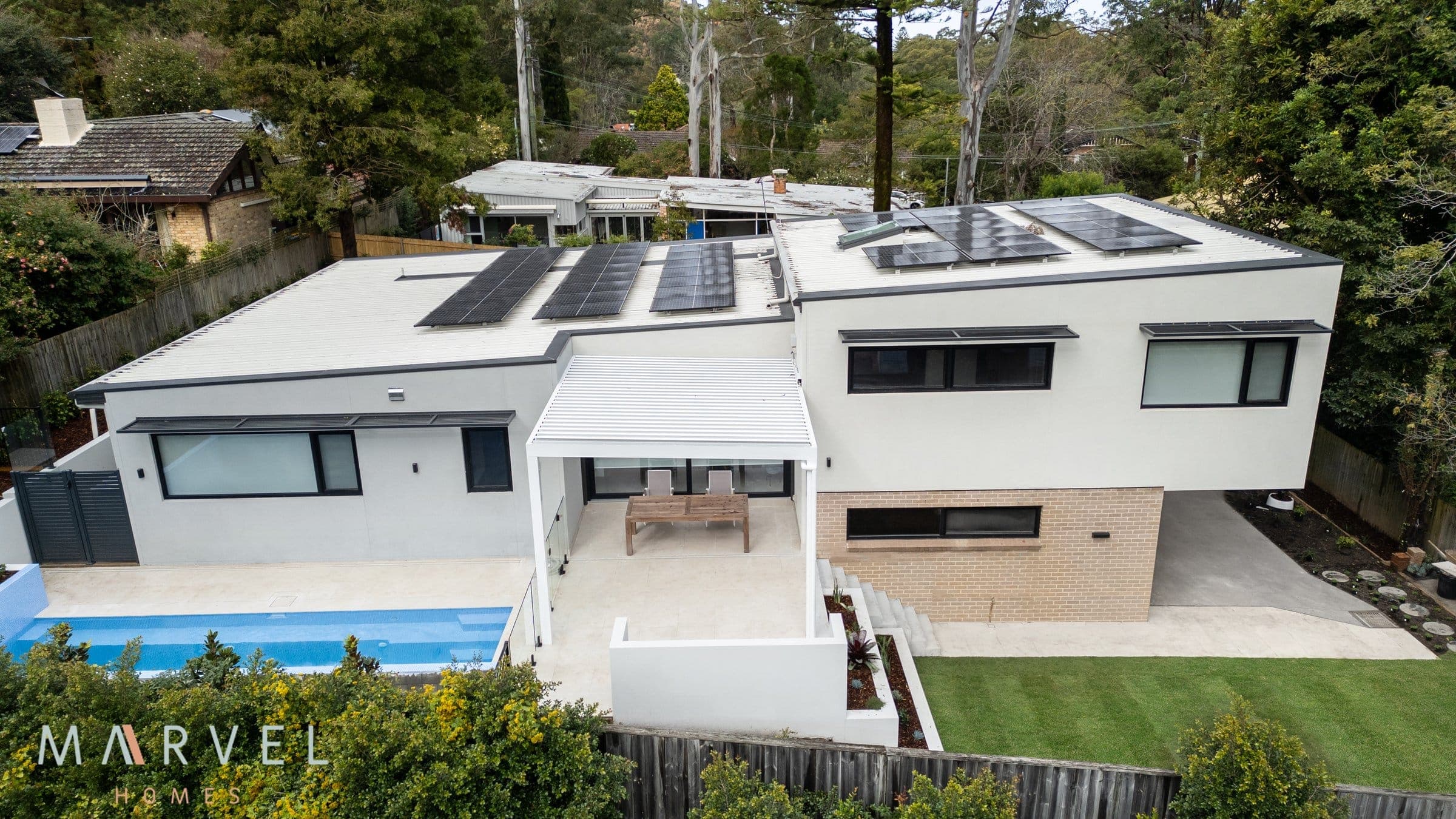
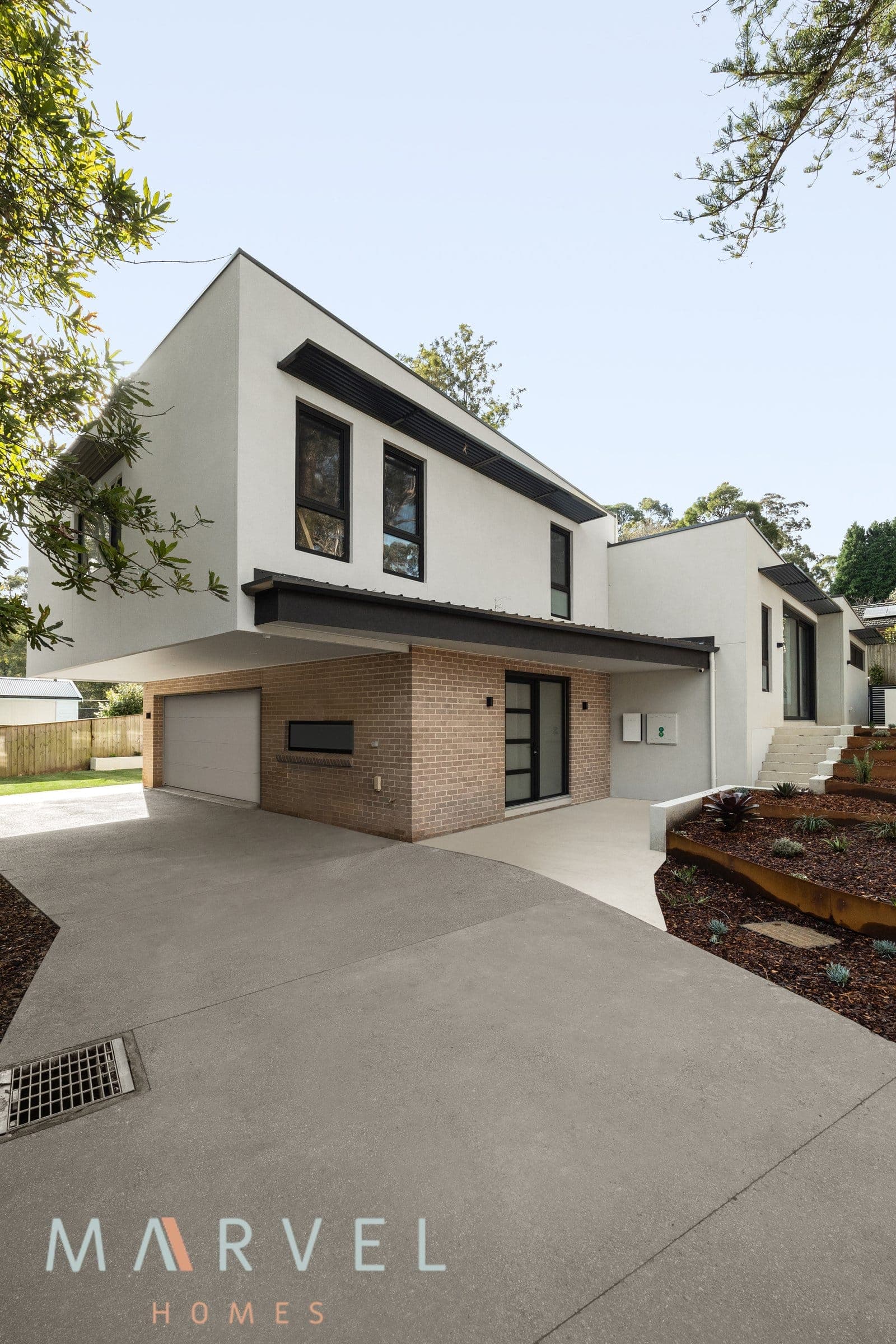
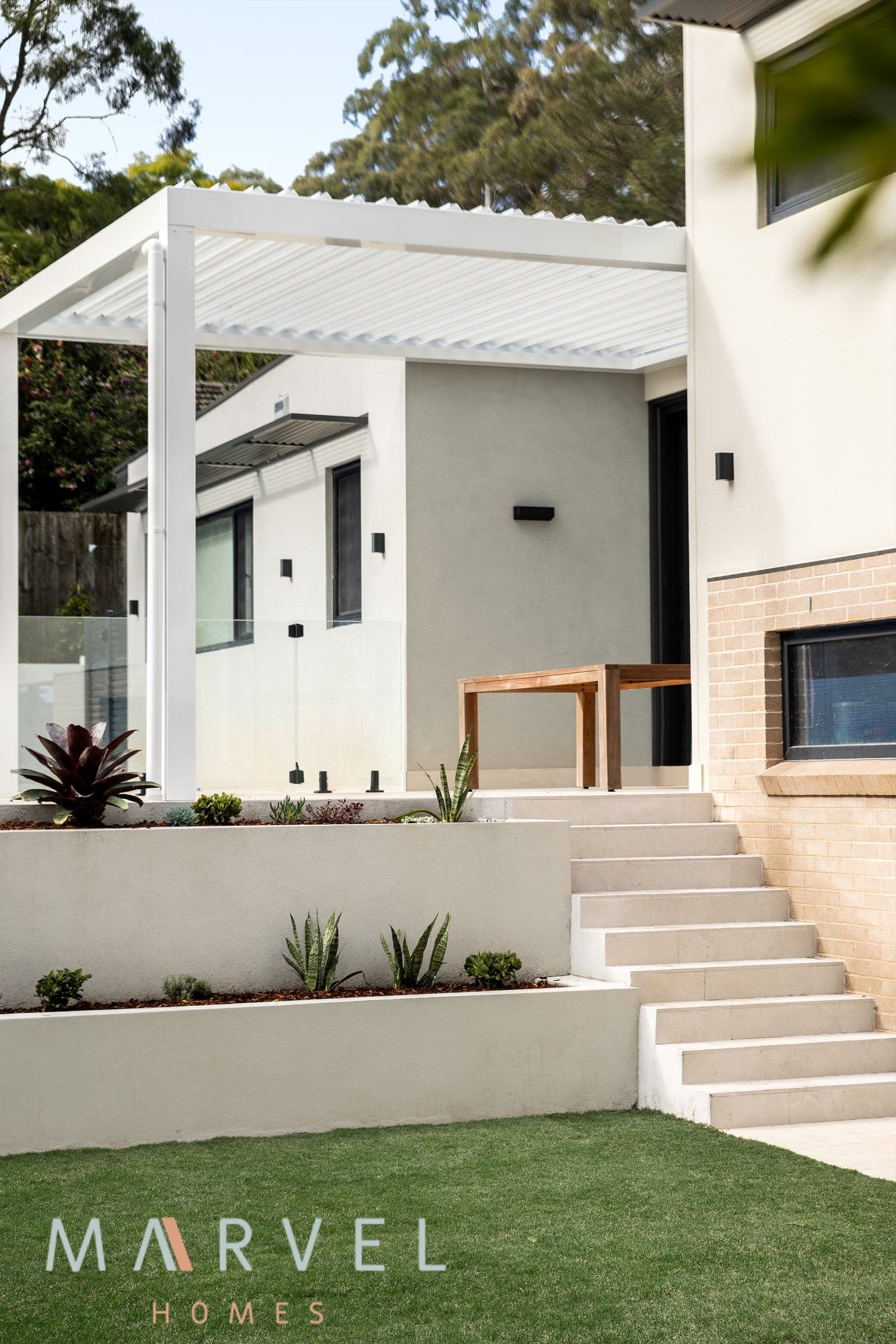
A recent Marvel Homes passive house at Warrawee, on a tree-canopied sloping block. The same standard we bring to coastal and sloping sites across the Northern Beaches.
Building on the Northern Beaches?
Share your address and brief. Mo will review the coastal constraints, bushfire mapping, and planning pathway.
See how we build